

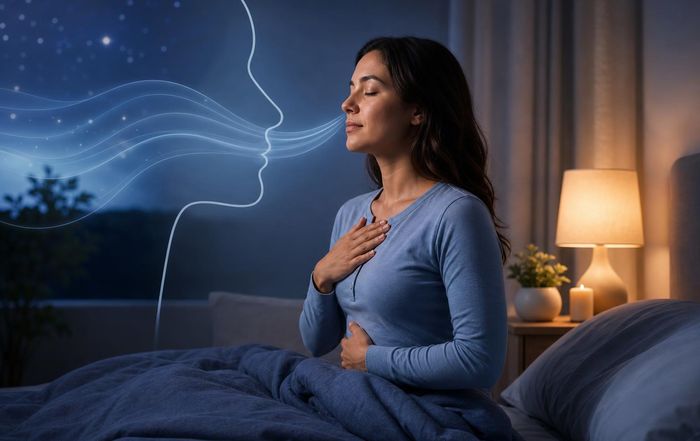
How Mindful Breathing Supports Better Sleep in a Restless World
In 2026, as global sleep quality continues to decline despite unprecedented access to health information, mindful breathing has quietly emerged as one of the most practical, evidence-backed tools for restoring rest. For readers of wellnewtime.com, who already recognize the deep connections between wellness, health, fitness, mindfulness, travel, beauty, business, lifestyle, and the environment, mindful breathing offers a unifying practice that connects these domains and helps recalibrate the nervous system in a world that rarely pauses.
This article explores how mindful breathing supports better sleep across cultures and regions, why it works from a physiological and psychological standpoint, and how individuals and organizations can integrate it into daily routines and workplace cultures. It draws on current scientific understanding, global best practices, and the lived realities of an always-on, digitally mediated world.
The Global Sleep Deficit and Why It Matters!
Across North America, Europe, Asia, Africa, and South America, sleep deprivation has become a defining public health challenge. The World Health Organization has repeatedly highlighted the links between insufficient sleep and chronic conditions such as cardiovascular disease, diabetes, depression, and obesity. Readers can explore broader health implications of poor sleep through resources such as the U.S. Centers for Disease Control and Prevention, which has labeled insufficient sleep a public health epidemic in the United States and other developed economies.
In the United Kingdom, the NHS has documented rising rates of insomnia and sleep-related anxiety, while in Germany, France, Spain, and Italy, workplace stress and longer screen time have contributed to a similar trend. In Asia, rapid urbanization and demanding work cultures in countries such as Japan, South Korea, Singapore, and China have made chronic sleep restriction almost normalized, a reality echoed in reports by the Organisation for Economic Co-operation and Development. In regions such as South Africa, Brazil, and other emerging markets, sleep health is increasingly recognized as a foundational pillar of long-term productivity and resilience.
For wellness fans, who track developments across health, wellness, and world trends, the global sleep deficit is not merely a medical concern; it is a lifestyle, business, and societal issue. Poor sleep undermines physical performance, emotional balance, decision-making quality, creativity, and long-term mental health, with direct implications for careers, relationships, and overall quality of life.
Understanding Mindful Breathing: More Than Just Deep Breaths
Mindful breathing is often misunderstood as simply "taking a few deep breaths," yet in its more precise sense it is a structured, intentional practice of observing and guiding the breath with sustained, nonjudgmental attention. It originates from contemplative traditions, including those preserved and taught by organizations such as Plum Village and The Mindfulness Center at Brown University, but it is now widely applied in clinical and secular contexts.
At its core, mindful breathing involves focusing attention on the sensations of inhalation and exhalation, noticing the movement of the chest or abdomen, and gently returning attention to the breath whenever the mind wanders. This simple act of sustained attention can trigger measurable shifts in the autonomic nervous system, a mechanism that researchers at institutions like Harvard Medical School and Stanford Medicine have studied extensively. Readers can explore related research on mind-body practices through sources such as Harvard Health Publishing.
Unlike quick relaxation tricks, mindful breathing is a skill that deepens over time. It does not aim to suppress thoughts or force sleep; instead, it creates the internal conditions in which sleep can arise naturally, by reducing arousal, quieting mental chatter, and shifting physiological states away from chronic fight-or-flight activation.
The Science: How Breathing Patterns Influence Sleep Physiology
From a physiological perspective, the link between breathing and sleep quality is rooted in the autonomic nervous system, which includes the sympathetic "fight-or-flight" branch and the parasympathetic "rest-and-digest" branch. When individuals spend long hours in front of screens, engage in late-night work, or navigate constant news cycles, they often remain in a state of sympathetic dominance, even when they lie down to sleep.
Mindful breathing, especially slow, diaphragmatic breathing, stimulates the vagus nerve and enhances parasympathetic activity, a phenomenon known as vagal tone. By extending the exhalation and slowing the respiratory rate to around six breaths per minute, individuals can lower heart rate, reduce blood pressure, and diminish the physiological markers of stress. Organizations such as the American Heart Association and American Psychological Association have documented the benefits of stress-reduction practices, including breathing techniques, on cardiovascular and mental health; readers can explore related material through the American Psychological Association and National Institutes of Health.
This shift in autonomic balance has direct implications for sleep onset and sleep continuity. When arousal is lowered, the transition from wakefulness to non-rapid eye movement (NREM) sleep becomes smoother, reducing the time it takes to fall asleep and the likelihood of frequent awakenings. Research summarized by the National Sleep Foundation and accessible through resources such as the Sleep Foundation highlights how relaxation techniques can improve subjective and objective measures of sleep quality.
For those interested in the intersection of fitness and recovery, mindful breathing also interacts with heart rate variability (HRV), a metric widely used by athletes and wellness enthusiasts. Higher HRV, associated with better parasympathetic function, is linked to improved resilience and better sleep architecture. Sports science institutes and platforms such as the Australian Institute of Sport and World Sleep Society have emphasized the importance of recovery protocols that include breathwork, especially for high-performance individuals in Europe, North America, and Asia.
Mindful Breathing and the Overactive Mind
Beyond its physiological effects, mindful breathing addresses the psychological side of insomnia, which often manifests as racing thoughts, worry, and anticipatory anxiety about the next day. In many countries, from the United States and Canada to the United Kingdom, Sweden, Norway, and Denmark, professionals report that they lie awake not because of physical discomfort but because their minds simply will not switch off.
Mindful breathing works here by providing an anchor for attention. When the mind is gently guided back to the sensations of the breath, it has less cognitive bandwidth to fuel rumination. Over time, individuals learn to recognize thoughts as passing mental events rather than urgent problems to solve at midnight. Clinical programs such as Mindfulness-Based Stress Reduction (MBSR), originally developed at UMass Chan Medical School, have demonstrated how mindfulness practices can reduce anxiety and improve sleep, work that is discussed by institutions such as the National Center for Complementary and Integrative Health.
This mental training is particularly relevant for business leaders, entrepreneurs, and knowledge workers, many of whom follow us for totally unique insights on business, brands, and innovation. In high-pressure environments in New York, London, Frankfurt, Zurich, Singapore, Tokyo, and Sydney, the ability to disengage mentally at night is becoming a strategic advantage, not a luxury. Mindful breathing offers a portable, discreet, and scalable method for cultivating that ability.
Integrating Mindful Breathing into a Holistic Wellness Lifestyle
For readers of wellnewtime.com, sleep is rarely viewed in isolation; it is part of a broader ecosystem of wellness, health, fitness, mindfulness, travel, beauty, and lifestyle choices. Mindful breathing fits naturally within this holistic framework, acting as a bridge between mental and physical practices.
On the wellness front, integrating a short breathing practice before bed can complement other routines such as gentle stretching, restorative yoga, or a warm shower, and it aligns with the broader principles outlined in resources on wellness and lifestyle. In health-focused routines, mindful breathing can be combined with consistent sleep and wake times, reduced caffeine in the afternoon, and light exposure management, practices supported by institutions like the National Institute of Neurological Disorders and Stroke.
For fitness enthusiasts in the United States, Canada, Germany, Sweden, Australia, and New Zealand, mindful breathing can be framed as a recovery tool, enhancing post-exercise relaxation and supporting muscle repair by improving sleep depth. Elite training centers and sports medicine clinics worldwide increasingly discuss breathwork as part of integrated performance programs, a trend mirrored in resources from organizations such as USA Cycling and the English Institute of Sport.
From a beauty and aesthetics perspective, high-quality sleep supports skin regeneration, hormonal balance, and a more vibrant appearance, themes that resonate with readers exploring beauty and self-care. Mindful breathing contributes indirectly to this by facilitating deeper, more restorative sleep stages, which are associated with growth hormone release and cellular repair, as discussed in dermatology and endocrinology literature and by organizations such as the American Academy of Dermatology.
Cultural and Regional Perspectives on Breath and Sleep
Breath-centered practices are embedded in many traditional cultures across Asia, Europe, Africa, and the Americas, and this historical context enriches the modern understanding of mindful breathing. In India, pranayama has long been a cornerstone of yoga, influencing contemporary therapeutic applications studied by institutions like All India Institute of Medical Sciences. In China, qigong and tai chi incorporate coordinated breathing and movement, with growing global interest documented by organizations such as the World Health Organization.
In Japan, practices such as ikigai and forest bathing, or shinrin-yoku, often integrate slow, intentional breathing in natural settings, a concept that has inspired wellness travel experiences in Japan, South Korea, Thailand, and across Scandinavia. Readers exploring travel and wellness-inspired experiences may find that mindful breathing becomes a way to deepen presence during journeys, reduce jet lag, and adjust more quickly to new time zones, especially on long-haul flights between Europe, North America, and Asia.
In Nordic countries such as Sweden, Norway, Denmark, and Finland, the cultural emphasis on balance, nature, and hygge or koselig has naturally aligned with the rise of breath-based relaxation practices, often combined with sauna rituals and cold exposure. These regional variations demonstrate that while mindful breathing is now discussed in scientific and corporate language, it is rooted in human traditions that span continents and centuries.
Mindful Breathing as a Strategic Business and Workplace Tool
The business implications of sleep quality have become increasingly clear to global organizations. Poor sleep is associated with higher error rates, lower creativity, increased absenteeism, and greater healthcare costs. Studies summarized by entities such as McKinsey & Company and the World Economic Forum have highlighted the economic burden of sleep loss on productivity in the United States, United Kingdom, Germany, Japan, and other major economies.
Forward-looking companies in technology, finance, consulting, and creative industries are beginning to incorporate mindful breathing into their wellness programs, executive coaching, and leadership retreats. In offices from Silicon Valley and Toronto to London, Berlin, Amsterdam, and Singapore, short guided breathing sessions before or after key meetings are used to reset attention and reduce stress. These initiatives align with broader trends in corporate wellness that recognize sleep as a critical performance variable rather than a personal issue to be managed after hours.
For people following business and workplace trends, mindful breathing represents a low-cost, high-impact intervention that can be implemented across distributed teams, hybrid workplaces, and remote work environments. Digital platforms, including mindfulness apps and enterprise wellness solutions, often incorporate breathing modules, and research from institutions such as MIT Sloan School of Management and INSEAD has begun to examine how these tools influence engagement and resilience.
In an era where talent mobility spans continents-from New York to London, Dubai, Singapore, and Sydney-organizations that support employee sleep and mental health through evidence-based practices such as mindful breathing are better positioned to attract and retain top professionals, especially in demanding sectors like technology, healthcare, finance, and consulting.
The Role of Mindful Breathing in Mental Health and Emotional Regulation
Sleep difficulties are rarely isolated from broader mental health concerns. Anxiety, depression, burnout, and chronic stress are tightly interwoven with insomnia and fragmented sleep. The World Health Organization and national health bodies across Europe, North America, and Asia have reported rising rates of anxiety and mood disorders, particularly among younger adults and professionals in high-pressure environments.
Mindful breathing supports emotional regulation by creating a moment-to-moment feedback loop between body and mind. When individuals learn to notice early signs of agitation-such as shallow breathing, tightness in the chest, or a racing heart-they can consciously slow and deepen their breath, which in turn sends calming signals back to the brain. This bidirectional relationship is central to many therapeutic approaches, including cognitive behavioral therapy for insomnia (CBT-I) and acceptance-based interventions, which are discussed in resources from the American Academy of Sleep Medicine and Mayo Clinic.
For followers exploring mindfulness and mental well-being, mindful breathing can be seen as both a standalone practice and a gateway to broader contemplative disciplines. It does not replace professional treatment where needed, but it can complement therapy, medication, and lifestyle changes, making it particularly valuable in regions where mental health services are limited or stigmatized.
Mindful Breathing and the Future of Sleep-Focused Innovation
By 2026, the global wellness and sleep technology markets have expanded significantly, with innovations ranging from smart mattresses and wearable trackers to ambient light systems and digital therapeutics. Amid this wave of hardware and software, mindful breathing stands out as a human-centered, low-tech practice that can integrate seamlessly with high-tech tools.
Sleep tracking devices used in the United States, Europe, and Asia now frequently monitor respiratory rate and HRV, offering feedback that encourages users to adopt slower, more coherent breathing patterns before bed. Some platforms, developed by companies such as Calm and Headspace, combine guided breathing with soundscapes and cognitive techniques, a convergence that aligns with the innovation themes covered on wellnewtime.com's innovation section.
In parallel, research institutions and startups in countries such as Germany, Switzerland, Sweden, Japan, South Korea, and Singapore are exploring how breath-guided neurofeedback and virtual reality environments can deepen relaxation and support insomnia treatment. Organizations like the European Sleep Research Society and National Institute of Mental Health continue to fund and disseminate research on digital interventions that incorporate breath training.
For readers who follow both wellness and innovation, mindful breathing offers a lens through which to evaluate new solutions: the most effective technologies often amplify or support the body's innate capacity to self-regulate, rather than overriding it. In this sense, mindful breathing is likely to remain a foundational practice even as the sleep technology landscape evolves.
Integrating Mindful Breathing into Daily Life: A Practical Perspective
While the science and global context are compelling, the true value of mindful breathing emerges in the details of daily life. For a professional in New York or London who finishes late-night calls with colleagues in Singapore, mindful breathing can serve as a deliberate boundary ritual between work and rest. For a parent in Toronto, Berlin, or Melbourne juggling family responsibilities and remote work, a brief breathing practice before bed can create a rare moment of internal quiet.
Happy visitors exploring daily content across fitness, massage and bodywork, and wellness may find that mindful breathing enhances the benefits of other relaxation modalities. For example, combining slow breathing with a professional massage or self-massage routine can deepen parasympathetic activation, while integrating breath awareness into stretching or yoga sequences can create a more coherent pre-sleep wind-down.
For frequent travelers moving between time zones-from Los Angeles to Tokyo, London to Singapore, or Paris to New York-breathing practices can ease transitions by helping the body adapt more quickly to new circadian schedules. Travel medicine clinics and organizations such as the U.S. Department of Transportation and International Air Transport Association have noted that non-pharmacological strategies, including relaxation techniques, can mitigate jet lag and travel fatigue.
Ultimately, mindful breathing is most effective when it becomes a consistent, familiar companion rather than an emergency intervention. Over weeks and months, individuals begin to associate specific breathing patterns with safety, rest, and letting go, a conditioned response that can significantly improve the reliability and depth of sleep.
Positioning Mindful Breathing Within the Wellnewtime.com Ecosystem
For wellnewtime.com, whose readers span continents and industries and whose interests range from wellness and health to travel, business, brands, lifestyle, environment, and global trends, mindful breathing represents a unifying thread that runs through many of the platform's focus areas. It intersects with physical health, mental resilience, beauty and aging, workplace performance, sustainable lifestyles, and even environmental awareness, as slower, more intentional living often correlates with more mindful consumption and a deeper connection to nature.
As the world navigates ongoing economic shifts, technological acceleration, and environmental challenges, the capacity to rest deeply and recover fully will remain a critical asset, both individually and collectively. Mindful breathing is neither a passing trend nor a niche practice; it is a foundational human skill, validated by modern science and refined by centuries of lived experience across cultures.
By understanding how mindful breathing supports better sleep and by integrating it into daily routines, travel habits, fitness programs, and workplace cultures, positive thinking readers of wellnewtime can cultivate a form of resilience that is quiet yet powerful, rooted in the simplest of actions: one conscious breath at a time. You’ve reached the end, and we’re grateful for your time. Keep exploring the site and join us again for the next original feature.