

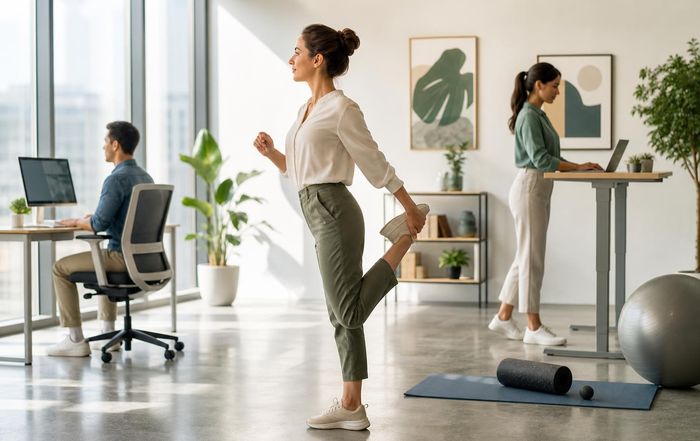
Movement Ideas for Modern Office Workers!
The New Office Reality: Why Movement Has Become a Strategic Business Priority
The modern office has evolved into a hybrid, borderless environment in which professionals in the United States, Europe, Asia, Africa and South America move fluidly between home, co-working spaces and traditional corporate headquarters. Yet one element has changed far less than it should: prolonged sitting. From London and Berlin to Singapore, New York and Sydney, knowledge workers remain seated for most of their working day, often in front of multiple screens, immersed in digital platforms that reward stillness rather than movement. For happy individuals here and visitors to the dedicated sections on wellness, health, fitness and business, this tension between cognitive performance and physical stagnation has become one of the defining challenges of contemporary professional life.
Over the past decade, research from organizations such as the World Health Organization has made it clear that physical inactivity is now one of the leading risk factors for global mortality, with sedentary office work contributing significantly to musculoskeletal disorders, metabolic disease and mental health concerns across regions including North America, Europe and Asia. Professionals across industries, from technology in California to financial services in London and consulting in Singapore, increasingly recognize that movement is no longer a "nice to have" wellness perk; it is a strategic necessity for sustainable performance, talent retention and organizational resilience. This shift is visible in the way forward-thinking companies and individuals are re-designing their workdays to integrate micro-movement, structured exercise, mindful breaks and active recovery, aligning with broader lifestyle trends that WellNewTime documents across its lifestyle and environment coverage.
The Health Risks of Sedentary Work in a Globalized Digital Economy
For the modern office worker, whether based in Toronto, Munich, Tokyo or Cape Town, the health implications of prolonged sitting are now well-documented. Studies summarized by the U.S. Centers for Disease Control and Prevention show that extended sedentary time is associated with increased risk of cardiovascular disease, type 2 diabetes and certain cancers, even in individuals who meet recommended exercise guidelines outside work hours. Professionals who commute long distances, work across time zones or spend extended periods in virtual meetings face compounded exposure to these risks, which can quietly undermine long-term wellbeing and career longevity.
In parallel, guidance from the National Health Service in the United Kingdom emphasizes that adults should reduce prolonged sitting and break up long periods of inactivity with short, frequent bouts of movement, highlighting that musculoskeletal issues such as lower back pain, neck tension and repetitive strain injuries are now among the most common causes of lost working days. For knowledge workers in Paris, Madrid, Amsterdam or Stockholm, this means that the traditional model of eight to ten hours at a desk is no longer compatible with evidence-based health recommendations, and organizations that ignore this reality may face rising health-care costs, reduced productivity and increased absenteeism. Those who wish to explore practical frameworks for healthier daily routines increasingly turn to resources like WellNewTime, where sections such as mindfulness and innovation highlight emerging approaches that blend science, technology and human-centric design.
Movement as a Performance Enhancer, Not a Distraction
While the health case for movement is compelling, the most persuasive argument for business leaders in New York, Zurich, Singapore or Seoul is often performance. Research synthesized by Harvard Business Review has consistently shown that physical activity improves cognitive function, creativity, decision-making and stress resilience, all of which are critical in high-pressure environments such as investment banking, legal practice, management consulting and fast-growing technology start-ups. Rather than viewing movement breaks as interruptions to "real work," progressive leaders now frame them as high-yield investments in mental clarity and sustained focus.
Neuroscience research from institutions such as Stanford University demonstrates that light to moderate physical activity can enhance divergent thinking and problem-solving, which explains why walking meetings, standing brainstorming sessions and short movement intervals are increasingly common in innovation-driven sectors across the United States, Germany, France and Japan. For readers of WellNewTime, particularly those following its world and news coverage, it is evident that organizations that integrate movement into their culture often report improved engagement, stronger collaboration and a more positive employer brand, which in turn supports recruitment and retention in competitive talent markets from San Francisco to Singapore.
Designing a Movement-Centric Workday: Micro-Habits for Global Professionals
Translating scientific insights into daily practice requires more than purchasing sit-stand desks or installing a gym in the office. For professionals working in hybrid or remote models from cities such as Vancouver, Melbourne, Milan or Bangkok, the most sustainable approach is the adoption of movement micro-habits that can be integrated seamlessly into existing workflows. Guidance from the American College of Sports Medicine suggests that breaking up sedentary time with short, frequent activity bouts can significantly improve metabolic health, even when total daily movement seems modest. For office workers, this can mean standing for a few minutes every half hour, walking during phone calls or performing simple mobility exercises between virtual meetings.
Global employers that take these insights seriously often develop internal guidelines that encourage staff to adopt movement rituals aligned with their time zones and cultural norms, whether that involves mid-morning stretch breaks in Tokyo, afternoon walking meetings in London or brief yoga sessions in São Paulo. Professionals who follow WellNewTime's coverage of fitness and wellness increasingly combine these micro-habits with structured exercise before or after work, creating a holistic movement strategy that supports both immediate performance and long-term health. This evolution reflects a broader shift away from viewing movement as a separate "gym activity" and toward embedding it as a continuous thread throughout the working day.
Evidence-Based Physical Activity Guidelines for Office Workers
To anchor movement strategies in credible science, it is useful to reference the global recommendations issued by the World Health Organization, which advise that adults aged 18-64 should engage in at least 150-300 minutes of moderate-intensity aerobic activity, or 75-150 minutes of vigorous-intensity activity, per week, combined with muscle-strengthening activities on two or more days. For office workers in the United States, Canada, the United Kingdom, Australia and beyond, these recommendations can be adapted to demanding schedules by distributing activity across shorter sessions, such as 20-30 minutes on most days, complemented by brief movement breaks during working hours.
National agencies such as Health Canada and Sport England provide region-specific guidance and practical tools to help individuals plan weekly routines that integrate walking, cycling, resistance training and flexibility work. For readers who track the intersection of personal health and professional performance through WellNewTime's health and business sections, these guidelines offer a framework for negotiating realistic expectations with employers, particularly in roles that involve long hours, frequent travel or intense project cycles. Organizations that align their wellness initiatives with such evidence-based standards are better positioned to demonstrate genuine commitment to employee wellbeing rather than superficial gestures.
Ergonomics, Posture and the Science of Sitting Less but Sitting Better
Even with increased movement, many office workers in cities such as Frankfurt, Amsterdam, Copenhagen and Seoul will still spend significant portions of their day seated, which makes ergonomics a critical component of any movement strategy. Guidance from the Occupational Safety and Health Administration in the United States emphasizes that workstation design, screen height, chair support and keyboard positioning all influence musculoskeletal load, fatigue and injury risk, particularly in roles that involve intensive computer use. When combined with regular movement breaks, ergonomically optimized setups can significantly reduce neck pain, back discomfort and wrist strain.
Professional organizations such as the Chartered Society of Physiotherapy in the United Kingdom provide practical advice on posture, chair adjustments and simple stretches that can be performed at the desk, offering accessible resources for office workers who may not have immediate access to onsite specialists. For readers of WellNewTime, particularly those interested in beauty and massage, the link between posture, muscular balance and perceived vitality is becoming more widely recognized, with many individuals integrating ergonomic assessments, therapeutic massage and corrective exercise into their broader self-care routines. In this context, sitting less and sitting better become complementary goals rather than competing priorities.
Mindfulness, Movement and Stress Regulation in High-Pressure Roles
Beyond physical health, movement plays a crucial role in emotional regulation and stress management, which is particularly relevant for professionals in high-responsibility roles across finance, law, healthcare, technology and senior leadership. Research highlighted by the American Psychological Association indicates that regular physical activity is associated with lower levels of anxiety and depression, improved sleep quality and enhanced resilience to chronic stress, outcomes that are increasingly important in a world characterized by economic uncertainty, rapid technological change and geopolitical instability.
Mind-body practices such as yoga, tai chi and mindful walking, often explored in depth in mindfulness and wellness stories, offer office workers in cities from Los Angeles and Toronto to Zurich and Singapore accessible tools for integrating movement and mental clarity. Institutions such as Mayo Clinic describe how even short, mindful movement sessions can reduce perceived stress and enhance mood, making them valuable interventions during demanding workdays filled with complex decisions, tight deadlines and continuous digital communication. When organizations embed these practices into their culture, they signal that mental wellbeing is as important as financial performance, reinforcing trust and psychological safety.
Travel, Remote Work and Movement Strategies for a Borderless Workforce
The rise of hybrid and remote work, accelerated by global events earlier in the decade, has created a new class of professionals who regularly shift between home offices, co-working spaces, corporate hubs and international travel. For these mobile workers, whether based in New York, London, Dubai, Singapore or São Paulo, movement strategies must be flexible enough to accommodate time zone changes, varying environments and irregular schedules. Guidance from the International Air Transport Association on in-flight movement, hydration and circulation has become increasingly relevant for those who frequently travel long distances between North America, Europe and Asia, helping to reduce the risk of deep vein thrombosis and fatigue.
In parallel, global health authorities such as the European Commission and regional public health agencies in countries like Sweden, Norway and Denmark emphasize the importance of active commuting, walking meetings and the use of urban green spaces to counterbalance the sedentary nature of digital work. For people exploring the travel and world sections, this convergence of mobility, wellbeing and professional life illustrates how movement strategies can be adapted to diverse cultural contexts, climates and urban designs, from cycling in Amsterdam and Copenhagen to park workouts in Sydney and outdoor yoga in Cape Town.
Corporate Culture, Leadership and the Economics of Movement
Movement strategies for office workers do not exist in a vacuum; they are shaped by corporate culture, leadership behavior and economic incentives. Research from the World Economic Forum highlights that organizations investing in employee wellbeing, including physical activity programs and ergonomic interventions, often see measurable returns in the form of reduced absenteeism, higher productivity and improved retention. In competitive markets such as the United States, Germany, Singapore and South Korea, where skilled professionals can choose among multiple employers, these factors can significantly influence employer attractiveness and brand perception.
For readers who follow WellNewTime's focus on brands and business, it is clear that leading companies now integrate movement into their broader environmental, social and governance narratives, aligning active design, flexible work policies and wellbeing programs with commitments to sustainable and human-centric workplaces. Leadership behavior is critical in this context; when executives in New York, London or Tokyo visibly prioritize movement, whether through walking meetings or participation in wellness initiatives, they legitimize similar behaviors across the organization, reducing the stigma that sometimes surrounds stepping away from the desk.
Technology, Wearables and Data-Driven Movement Strategies
The integration of technology into movement strategies has accelerated rapidly by 2026, with professionals across North America, Europe and Asia using wearables, mobile apps and digital coaching platforms to track steps, heart rate, posture and sleep. Organizations such as Apple, Garmin and Fitbit have contributed to a culture in which data-driven insights guide daily decisions about activity levels, rest and recovery, while corporate wellness platforms aggregate anonymized data to identify patterns and refine interventions. Guidance from the U.S. National Institutes of Health underscores the potential of such technologies to support behavior change when combined with personalized feedback and social support.
At the same time, thoughtful professionals and organizations, including many covered by us in the innovation and news pages, recognize the importance of data privacy, ethical use of health information and the avoidance of surveillance cultures that could erode trust. When implemented responsibly, technology can help office workers in cities from Boston and Vancouver to Munich and Tokyo translate abstract movement recommendations into concrete, measurable habits that align with their unique roles, responsibilities and life stages, while also providing organizations with aggregated insights into the effectiveness of their wellbeing strategies.
Integrating Movement into Personal and Professional Identity
Ultimately, the most effective movement strategies for modern office workers are those that become part of personal and professional identity rather than temporary resolutions. Professionals in New York, London, Berlin, Singapore, Johannesburg or São Paulo who see themselves as active, health-conscious individuals are more likely to protect time for movement, negotiate realistic expectations with employers and design workspaces that support physical and mental wellbeing. Resources such as WellNewTime, through its integrated original reporting of wellness, health, fitness, lifestyle and environment, play a meaningful role in shaping this identity by providing credible, practical and globally relevant perspectives.
As the world of work continues to evolve, with artificial intelligence, automation and remote collaboration reshaping roles across continents, movement will remain a uniquely human capability that supports creativity, resilience and connection. For organizations and individuals who wish to thrive in this landscape, the challenge is not only to understand the science of movement but to embed it into daily routines, cultural norms and strategic decision-making. In doing so, they move beyond the outdated trade-off between productivity and wellbeing and embrace a model in which healthier bodies, clearer minds and more sustainable careers reinforce one another. For the global audience of WellNewTime, this integrated approach to movement is not simply a trend; it is a foundational strategy for living and working well in 2026 and beyond, wherever in the world the office may be.