

Simple Lifestyle Changes That Last: A Global Blueprint for Sustainable Wellbeing
Rethinking Lifestyle Change in a Disrupted World
Well then, individuals and organizations across the world are re-evaluating what it really means to live well, work sustainably, and stay resilient amid rapid technological, economic, and environmental change. From the United States and the United Kingdom to Germany, Singapore, Australia, South Africa, Brazil, and beyond, people are discovering that the most enduring improvements in wellbeing rarely come from dramatic overhauls or short-lived resolutions, but from simple lifestyle changes that can be integrated into daily routines and maintained over years rather than weeks.
For WellNewTime and its happy healthy mind audience, this shift is more than a passing trend; it is a structural change in how health, fitness, mindfulness, travel, beauty, business, and lifestyle are understood and practiced. As research from organizations such as the World Health Organization shows, sustainable health behaviors are rooted in small, consistent actions that compound over time, rather than extreme interventions that burn out quickly. Readers who explore the broader ecosystem of wellbeing at Well New Time's wellness section consistently report that what helps them most are realistic strategies that fit their real lives, whether they are navigating demanding careers in London, caregiving responsibilities in Toronto, entrepreneurial ventures in Berlin, or hybrid work in Tokyo.
The modern challenge is not a lack of information; it is the overwhelming abundance of advice, much of it conflicting, unverified, or unsuited to different cultures and working realities. In this environment, experience, expertise, authoritativeness, and trustworthiness matter more than ever. By drawing on established science, global best practices, and practical case examples, this article explores simple lifestyle changes that last, while reflecting the integrated perspective on health, fitness, mindfulness, travel, business performance, and personal fulfillment that defines Well New Time.
The Science of Small, Sustainable Habits
Long-term behavior change is not a matter of willpower alone; it is a process shaped by environment, identity, and systems. Over the past decade, behavioral scientists and public health experts have converged on the insight that micro-habits, when repeated consistently, can significantly improve physical and mental health. Research summarized by the Centers for Disease Control and Prevention indicates that modest, regular increases in physical activity can lower the risk of chronic diseases, improve mood, and enhance cognitive performance, even when total exercise time remains relatively short. Learn more about how incremental activity supports long-term health through the CDC's physical activity guidelines.
In parallel, psychologists studying habit formation have found that small actions tied to existing routines are far more likely to endure than ambitious, standalone goals. The University College London study often cited in habit research suggests that building a new habit can take several weeks to months, depending on complexity, and that early inconsistency does not doom the process as long as individuals return to the behavior. Readers who engage with the practical guidance in the Well New Time health hub often recognize themselves in these findings: rather than striving for perfection, they look for realistic, repeatable actions that align with their identities as professionals, parents, travelers, or creators.
From a neurological perspective, repeated behaviors gradually become encoded in brain circuits, reducing the mental effort required to execute them. Institutions such as Harvard Medical School have highlighted how consistent routines around sleep, nutrition, and movement support the brain's capacity to regulate stress and maintain emotional balance. Those interested in the cognitive foundations of habit can explore the role of neuroplasticity and routine in resources provided by Harvard Health Publishing.
Foundations of Physical Wellness That Endure
Physical wellness remains a central priority for the Well New Time community, yet many readers in North America, Europe, and Asia report that traditional fitness advice often feels unrealistic when layered on demanding careers and family responsibilities. The emerging consensus is that sustainable physical wellbeing is built on simple, integrated practices that respect the constraints of modern life.
A foundational shift has occurred in the understanding of movement. Rather than viewing exercise as something that must happen in a gym or during a long workout, health organizations like the World Health Organization and NHS UK emphasize total daily movement-short walks, active commuting, stair use, and brief home-based routines-as meaningful contributors to health. Learn more about sustainable activity patterns through the WHO's physical activity recommendations. This aligns with the experience of readers who visit the Well New Time fitness section, where they often seek ways to incorporate movement into commutes in cities such as Amsterdam, Singapore, or New York, or into remote workdays in suburban and rural environments.
Nutrition, similarly, is moving away from restrictive dieting toward stable, flexible patterns centered on whole foods, adequate protein, fiber, and hydration. Organizations such as the Harvard T.H. Chan School of Public Health advocate for dietary patterns like the Mediterranean-style approach, which has been associated with lower cardiovascular risk and better metabolic health. Learn more about practical, long-term nutrition strategies via Harvard's Healthy Eating Plate guidance. For readers in regions such as Italy, Spain, and Greece, these patterns often resonate culturally; for those in Asia, Africa, and South America, similar principles can be adapted to local ingredients and culinary traditions.
Recovery and sleep have also moved to the forefront of sustainable wellness. The National Sleep Foundation and leading sleep researchers underscore that consistent sleep schedules, reduced evening screen exposure, and simple wind-down rituals can dramatically improve sleep quality without complex interventions. Professionals who follow Well New Time often report that small changes-such as setting a digital curfew, dimming lights in the evening, or standardizing wake times even on weekends-yield disproportionate benefits in energy, mood, and productivity. Readers interested in integrating these foundational practices into a broader lifestyle strategy can explore curated daily insights in the Well New Time lifestyle section.
Mindfulness and Mental Resilience in High-Pressure Environments
Mental health and emotional resilience have become central concerns across corporate centers in London, Frankfurt, New York, Tokyo, Singapore, and Sydney, as well as in fast-growing ecosystems in Johannesburg, São Paulo, and Bangkok. The global rise of hybrid work, digital overload, and geopolitical uncertainty has pushed individuals and organizations to seek simple, evidence-based practices that protect mental health without requiring extensive time or specialized environments.
Mindfulness, once considered niche, has now been integrated into mainstream healthcare and corporate wellbeing programs. Research summarized by Oxford Mindfulness Foundation and American Psychological Association indicates that brief, regular mindfulness practices can reduce perceived stress, improve attention, and support emotional regulation. Learn more about the scientific basis for mindfulness training through the American Psychological Association's overview of mindfulness research. For Well New Time readers in cities such as Berlin, Toronto, and Seoul, the appeal lies in the simplicity of these techniques: a few minutes of focused breathing before meetings, short body scans after work, or mindful walking between appointments.
The Well New Time mindfulness hub reflects this practical orientation, highlighting techniques that can be integrated into daily routines rather than requiring extended retreats. Organizations like Mayo Clinic emphasize that mindfulness does not need to be complex; consistent, small practices deliver meaningful benefits when aligned with individual preferences and cultural contexts. Readers can explore straightforward approaches to meditation, breathing exercises, and stress management through resources such as Mayo Clinic's guide to mindfulness exercises.
Alongside mindfulness, psychological resilience is increasingly understood as a skill that can be developed. Institutions such as the American Psychiatric Association and National Institute of Mental Health highlight the value of social support, cognitive reframing, and self-compassion in buffering stress and reducing burnout. Professionals navigating demanding roles in finance, technology, healthcare, and creative industries are learning to view self-care not as indulgence but as a strategic asset. Those who follow Well New Time often combine mental wellbeing practices with physical activity, travel, or nature exposure, reflecting a holistic understanding that mental health is inseparable from the broader patterns of life.
Travel, Micro-Retreats, and the Power of Restorative Experiences
Travel has long been associated with escape and exploration, but in 2026 it is increasingly being reimagined as a tool for wellbeing, creativity, and sustainable reset. For the global audience of Well New Time, spanning Europe, Asia, North America, Africa, and Oceania, the concept of the extended, exhausting business trip is giving way to shorter, more intentional journeys that combine work, rest, and personal growth.
The rise of micro-retreats-short, restorative trips that prioritize recovery, nature, and reflection-is supported by emerging research on the benefits of time away from routine environments. Studies referenced by organizations such as the American Psychological Association suggest that even brief breaks, when structured thoughtfully, can reduce stress and enhance cognitive performance upon return. Learn more about the psychological benefits of vacation and downtime through the APA's resources on work, stress, and recovery. Readers who explore the Well New Time travel section often look for destinations and formats that support mindfulness, light activity, and digital disconnection rather than constant stimulation.
Nature-based travel, whether it involves hiking in the Alps, coastal walks in Australia, forest retreats in Scandinavia, or eco-lodges in Thailand and Costa Rica, aligns with growing evidence that exposure to green spaces supports mental health and cardiovascular wellbeing. Organizations like Nature Conservancy and European Environment Agency highlight how well-designed natural environments contribute to public health, especially in dense urban regions. Learn more about the relationship between nature and wellbeing through the European Environment Agency's work on green spaces and health.
For many professionals, the key to sustainable travel is not frequency but intentionality. Simple practices-such as planning one or two restorative trips annually, extending a business trip by a day for personal recovery, or choosing accommodations that support sleep and healthy eating-can transform travel from a stressor into a source of renewal. These strategies resonate strongly with the integrated perspective on wellness, fitness, and lifestyle that defines Well New Time's editorial approach.
Everyday Beauty and Self-Care as Sustainable Rituals
Beauty, once dominated by surface-level trends and rapid product cycles, is increasingly converging with wellness, mental health, and environmental responsibility. In 2026, consumers in markets from Paris and Milan to Seoul, Tokyo, New York, and São Paulo are seeking routines that are simple, evidence-based, and aligned with both personal values and planetary boundaries.
Dermatologists and reputable organizations such as the American Academy of Dermatology emphasize that effective skincare does not require complex regimens with numerous products. Instead, consistent use of sunscreen, gentle cleansing, and targeted treatment for specific concerns often delivers the most reliable results. Learn more about science-based skincare fundamentals through the AAD's guidance on building a skincare routine. This perspective aligns with the values of Well New Time, where beauty is framed as an extension of overall health rather than an isolated pursuit. Readers can explore integrated perspectives on beauty, wellness, and lifestyle in the Well New Time beauty section.
Self-care rituals, whether they involve skincare, haircare, or body treatments, are increasingly seen as opportunities to practice mindfulness and stress reduction. Short, consistent routines-such as a nightly skincare ritual, a weekly at-home spa session, or a monthly professional treatment-can anchor broader lifestyle changes by providing moments of intentional pause. Organizations like Cleveland Clinic have noted how self-care practices, when approached thoughtfully, can contribute to reduced stress and improved mood. Learn more about practical self-care strategies through Cleveland Clinic's resources on stress management and self-care.
Massage and bodywork are also being reframed as part of a sustainable wellness strategy rather than occasional indulgences. Evidence from sources such as Johns Hopkins Medicine suggests that massage may help reduce muscle tension, support relaxation, and complement other stress-management practices. Readers interested in integrating massage into their routines can explore perspectives and approaches in the Well New Time massage section, where the focus is on accessibility, cultural variation, and long-term benefits rather than luxury alone.
Business, Brands, and the Economics of Sustainable Lifestyle Change
The growing emphasis on simple lifestyle changes that last is reshaping not only individual behavior but also corporate strategy, brand positioning, and labor markets. In 2026, organizations across North America, Europe, and Asia-Pacific recognize that employee wellbeing is directly linked to productivity, retention, and innovation. As a result, wellness is moving from the periphery of corporate policy into the core of business strategy.
Global consultancies and institutions such as McKinsey & Company and the World Economic Forum have documented the economic value of health and wellbeing, noting that healthier employees tend to demonstrate higher engagement and lower absenteeism. Learn more about the business case for wellbeing through the World Economic Forum's insights on workplace health and productivity. For Well New Time, this intersection between wellbeing and performance is central to how it curates content for business leaders, entrepreneurs, and professionals, particularly through its business-focused coverage.
Brands are responding by integrating wellness, sustainability, and authenticity into their core offerings. From athletic and outdoor companies in the United States and Europe to beauty and technology brands in South Korea, Japan, and China, there is a clear movement toward products and services that support long-term health rather than short-term fixes. Organizations like OECD and United Nations Environment Programme highlight how consumer demand for sustainable, health-oriented products is reshaping markets and regulatory frameworks. Learn more about sustainable business practices through the UNEP's work on sustainable lifestyles and consumption.
For job seekers and professionals navigating career transitions in dynamic markets such as Germany, Canada, Singapore, and Brazil, the alignment between employer practices and personal wellbeing has become a key decision factor. The Well New Time jobs section increasingly features roles and organizations that recognize flexible work, mental health support, and wellness benefits as competitive advantages. This shift reflects a broader recognition that simple, sustainable lifestyle changes are not the sole responsibility of individuals; they are co-created by the policies, cultures, and infrastructures of the organizations and cities in which people live and work.
Environment, Innovation, and the Future of Sustainable Living
Lifestyle change that truly lasts must also be compatible with environmental realities. In 2026, climate concerns and resource constraints are prompting individuals, cities, and companies worldwide to align personal wellbeing with planetary health. Simple choices-such as walking or cycling for short commutes, reducing food waste, choosing plant-forward meals, or favoring low-impact travel options-are increasingly viewed as ways to support both personal health and environmental resilience.
Organizations like the Intergovernmental Panel on Climate Change and World Resources Institute have documented how lifestyle-related emissions, especially in high-income regions such as North America and Europe, significantly influence global climate trajectories. Learn more about sustainable lifestyle pathways through the World Resources Institute's work on food, cities, and climate. For Well New Time, which addresses audiences from Scandinavia to South Africa and from Japan to New Zealand, the connection between environment and wellbeing is a recurring theme, explored in depth in its environment-focused coverage.
Innovation is playing a crucial role in making sustainable lifestyles more accessible. From digital health apps and wearable devices that encourage movement and sleep hygiene, to telemedicine services that expand access to care in rural regions, to smart city planning that prioritizes green spaces and active transport, technology is increasingly being harnessed to support simple, healthy behaviors. Leading institutions such as MIT and Stanford University continue to explore how design, behavioral science, and emerging technologies can nudge people toward better choices without overwhelming them. Learn more about human-centered innovation in health and cities through MIT's work on health and wellbeing. Readers can follow the evolution of these trends in the Well New Time innovation section, where the focus remains on technologies that genuinely enhance quality of life rather than simply adding complexity.
Integrating Simple Changes into a Coherent Life Plan
For loyal and kind member readers of WellNewTime across continents, the central challenge is not identifying individual tips, but integrating simple changes into a coherent, long-term life strategy. Sustainable change emerges when health, fitness, mindfulness, travel, beauty, work, and environment are aligned rather than treated as competing priorities.
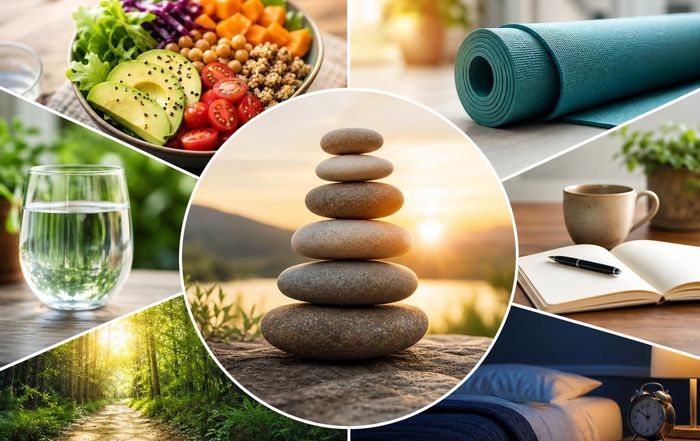
This integration often begins with a few core commitments: consistent movement woven into daily life; stable, flexible nutrition patterns; regular sleep and recovery; brief, repeatable mindfulness practices; intentional rest and travel; and small environmental choices that reflect personal values. Over time, these choices reinforce one another, creating a virtuous cycle of energy, clarity, and resilience. The homepage at wellnewtime.com and its thematic sections-from wellness and health to lifestyle, brands, and world news-are designed to support this new integrated approach, offering insights that respect the realities of modern life while anchoring recommendations in trustworthy expertise.
In an era marked by rapid change and constant information, the most powerful lifestyle transformations are often the simplest and most sustainable. By focusing on small, evidence-based adjustments that can be maintained across seasons, cultures, and life stages, individuals in the United Kingdom, Germany, Canada, Australia, France, Italy, Ireland, Switzerland, Sweden, Norway, Singapore, Indonesia and beyond can build lives that are not only healthier and more resilient, but also more aligned with their deepest values. In this sense, simple lifestyle changes that last are not just personal choices; they are building blocks of a more balanced, humane, and sustainable global future.