

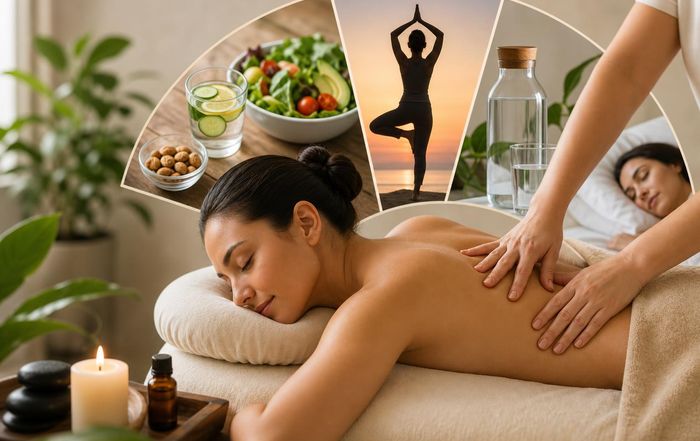
How Massage Fits Into Healthy Living
The New Definition of Healthy Living
Healthy living has evolved far beyond the narrow focus on diet and exercise that dominated wellness conversations a decade ago, and lovely little community of wellnewtime.com increasingly expect a more integrated, evidence-informed view that connects physical health, mental resilience, emotional balance, and sustainable lifestyle choices. In this broader context, massage therapy has moved from being perceived as an indulgent luxury or occasional spa treat to a strategic component of a comprehensive health and wellness plan, sitting alongside fitness, nutrition, sleep, and mindfulness as a core pillar of preventive care and long-term vitality.
This shift has been driven by a convergence of trends: the global rise in stress-related conditions documented by organizations such as the World Health Organization (learn more about stress and health), the normalization of hybrid and remote work that blurs boundaries between professional and personal life, and a growing body of clinical research validating massage as a supportive therapy for pain management, recovery, and mental wellbeing. For an audience that follows the latest insights on wellness and holistic health, understanding how massage fits into this new landscape is no longer optional; it is a strategic advantage in designing a sustainable, high-performance lifestyle.
From Spa Luxury to Evidence-Informed Therapy
Massage's transition from a perceived luxury to a recognized health-supporting practice has been underpinned by research emerging from respected institutions such as Mayo Clinic and Cleveland Clinic, which now provide patient-facing resources explaining the potential benefits of therapeutic touch for conditions ranging from chronic back pain to anxiety. Readers can explore how leading hospitals describe the role of massage in integrative care by visiting resources like Mayo Clinic's overview of complementary therapies and similar guidance from Cleveland Clinic's wellness programs.
In the United States, the National Institutes of Health has expanded its coverage of complementary and integrative health, including massage, through the National Center for Complementary and Integrative Health (NCCIH), which offers accessible summaries of clinical findings and safety considerations for the public and health professionals alike; those interested in the scientific evidence can review NCCIH's information on massage therapy. This growing evidence base has encouraged more primary care physicians, physiotherapists, and mental health professionals to recommend massage as part of multi-modal treatment plans, particularly for musculoskeletal issues, stress-related symptoms, and sleep disturbances.
For a business-oriented readership that follows health sector developments, this shift has also created a rapidly expanding ecosystem of regulated massage practices, digital booking platforms, and corporate wellness programs, with insurers in markets such as Germany, Canada, and parts of Asia increasingly reimbursing massage when prescribed or delivered within a recognized therapeutic framework. The result is a new level of legitimacy and accessibility that firmly embeds massage into the architecture of modern healthy living.
Massage as a Pillar of Physical Health and Recovery
The physical benefits of massage now sit at the intersection of sports science, rehabilitation, and preventive medicine, and they are particularly relevant to readers engaged with fitness and performance. Athletes and active professionals across North America, Europe, and Asia have long used massage to support training cycles, but what has changed by 2026 is the degree to which everyday exercisers, remote workers, and older adults recognize its value in managing muscular tension, improving mobility, and reducing the risk of overuse injuries.
Research summarized by organizations such as Harvard Medical School has highlighted how massage can assist with muscle recovery by improving local circulation, reducing delayed onset muscle soreness, and supporting joint range of motion; those interested in the physiological mechanisms can explore Harvard's health insights on exercise and recovery. For individuals in desk-based roles from London to Singapore who struggle with neck, shoulder, and lower back discomfort, targeted therapeutic massage has become an accessible way to address postural strain, often used alongside ergonomic adjustments and stretching routines recommended by occupational health experts.
In rehabilitation settings across Germany, Canada, and Australia, physiotherapists increasingly integrate manual therapy and massage techniques into structured treatment protocols for conditions such as chronic low back pain, tension headaches, and certain sports injuries, aligning with guidance from organizations like the American Physical Therapy Association and the Chartered Society of Physiotherapy in the United Kingdom. Readers seeking practical, medically grounded information on musculoskeletal health can learn more about back pain management through national health services that now frequently reference massage as one component of a broader care plan.
The Stress-Sleep-Massage Connection
One of the most significant reasons massage has become central to healthy living is its impact on stress regulation and sleep quality, two areas that have gained heightened importance in the wake of global disruptions, economic uncertainty, and ongoing digital overload. Chronic stress has been identified by the American Psychological Association as a key driver of physical and mental health problems, affecting cardiovascular risk, immune function, and mood; readers can explore the APA's stress resources to understand the broader context in which massage operates.
Massage sessions, whether Swedish, deep tissue, or more specialized modalities, are now recognized for their ability to activate the parasympathetic nervous system, reduce sympathetic arousal, and create a physiological environment conducive to relaxation and emotional decompression. Studies reported by institutions such as Johns Hopkins Medicine and Stanford Medicine have indicated that relaxation-focused practices, including massage, can support better sleep onset and sleep quality, especially when combined with consistent sleep hygiene habits and reduced evening screen time; those seeking a scientific overview of sleep and health can review educational materials from Johns Hopkins.
For a global audience concerned with burnout across industries from technology in California to finance in London and manufacturing in Germany, massage has become an accessible, non-pharmacological tool to reset the stress-sleep cycle. On wellnewtime.com, this aligns closely with content that explores how lifestyle design, restorative practices, and mindfulness approaches can reinforce each other to create a more resilient, sustainable way of living and working.
Mental Wellbeing, Mindfulness, and Emotional Regulation
Healthy living in 2026 cannot be discussed without addressing mental health, and massage occupies an increasingly important place in this conversation, particularly when integrated with mindfulness and cognitive strategies. While massage is not a substitute for psychotherapy or medical treatment, it can play a meaningful adjunctive role in alleviating symptoms of mild to moderate anxiety, supporting emotional regulation, and enhancing body awareness, especially for individuals who spend much of their day in cognitively demanding, screen-based environments.
Organizations such as Mind in the United Kingdom and the National Alliance on Mental Illness (NAMI) in the United States emphasize the value of self-care and somatic practices as part of broader mental health plans; readers can learn more about practical mental health strategies that complement professional care. Massage, by fostering a sense of groundedness and present-moment awareness, can deepen the impact of practices such as meditation and breathwork, which are frequently highlighted in mindfulness and wellness coverage on wellnewtime.com.
From Tokyo to Toronto, there is a growing recognition that mental resilience is not built solely through cognitive reframing or digital wellbeing apps, but also through embodied experiences that help individuals reconnect with their physical selves. Massage provides such an experience, offering a structured, intentional pause in which the nervous system can downshift, the mind can decelerate, and individuals can experience a rare form of undivided, non-judgmental attention. This sense of safety and presence is increasingly valued in a world characterized by constant notifications and fragmented focus.
Integrating Massage into Daily and Weekly Routines
For massage to genuinely fit into healthy living rather than remaining an occasional treat, it must be integrated into routines in a way that is realistic, sustainable, and aligned with personal goals, budgets, and cultural contexts. In major urban centers from New York and London to Singapore and Sydney, the growth of accessible wellness studios, mobile therapists, and workplace wellness programs has made it easier to schedule regular sessions, while digital platforms have simplified booking and payment processes.
Readers of wellnewtime.com who are designing a comprehensive lifestyle plan that includes fitness, travel, and mindfulness often find that committing to a consistent massage cadence-such as biweekly or monthly-creates a reinforcing loop with other healthy habits. For example, individuals training for endurance events in Europe may use massage to support recovery and injury prevention, while frequent business travelers across Asia and North America may schedule sessions to counteract jet lag, sleep disruption, and the physical strain of long-haul flights.
In countries like Sweden, Norway, and Denmark, where work-life balance and preventive health are deeply embedded cultural values, employers increasingly offer massage as part of corporate wellness programs, recognizing its potential to reduce musculoskeletal complaints, improve morale, and support retention. This trend intersects with broader workplace wellbeing initiatives championed by organizations such as the World Economic Forum, which has highlighted mental and physical health as critical components of future-ready workplaces; those interested in these macro trends can explore the WEF's insights on health and well-being.
Massage and the Global Wellness Economy
From a business and brands perspective, massage sits at the heart of the global wellness economy, which has continued to grow across regions including North America, Europe, and Asia-Pacific, even amid economic volatility. The Global Wellness Institute has documented the expansion of wellness tourism, workplace wellness, and personal care services, all of which intersect with massage in different ways; executives and entrepreneurs can review global wellness market research to understand where investment and innovation are accelerating.
On wellnewtime.com, which covers business and brand developments in wellness, massage is increasingly discussed not only as a therapeutic modality but also as a business model and brand-building opportunity. From boutique studios in Berlin and Barcelona that blend massage with mindfulness coaching, to large chains in the United States and Canada offering membership-based recovery services, the sector has diversified to serve different demographics, price points, and cultural preferences. This diversification has also encouraged higher standards of training, certification, and customer experience, as consumers become more discerning and more informed about what constitutes safe, effective, and ethical practice.
For brands positioning themselves at the intersection of beauty, wellness, and lifestyle, massage has become a key differentiator in service menus and product lines, particularly in markets such as France, Italy, and South Korea where skincare rituals are deeply embedded in culture. Readers interested in how massage is integrated into modern beauty and self-care routines can explore related content in the beauty section of wellnewtime.com, where facial massage, lymphatic drainage, and body sculpting techniques are frequently analyzed in connection with skincare science and aesthetic trends.
The Science of Touch, Trust, and Safety
A crucial dimension of massage's role in healthy living is the science of touch and the importance of trust, safety, and professional standards. Human touch has been shown in numerous studies to influence oxytocin levels, heart rate variability, and perceived social support, with implications for emotional wellbeing, immune function, and even pain perception. Institutions such as University College London and Karolinska Institutet in Sweden have contributed to the growing field of affective touch research, highlighting how gentle, intentional touch can modulate the nervous system; those wishing to delve into the neuroscience of touch can explore educational resources from UCL.
However, because massage involves close physical contact, healthy living frameworks increasingly emphasize the importance of professional ethics, clear communication, and informed consent. Reputable practitioners in the United States, United Kingdom, Germany, and other markets adhere to guidelines set by professional associations and regulatory bodies, maintain high standards of hygiene, and undertake continuing education in anatomy, pathology, and trauma-informed practice. For consumers, understanding these standards and learning how to evaluate providers has become an essential part of safeguarding their wellbeing and maximizing the benefits of massage.
Public health agencies and consumer protection organizations, including the U.S. Centers for Disease Control and Prevention (CDC) and the European Commission, have also published guidance on infection control and safe operation of close-contact services, especially in the wake of recent global health crises; interested readers can review CDC recommendations on hygiene in personal services. This emphasis on safety has elevated the professionalism of the massage industry and reassured clients across regions from South Africa to New Zealand that massage can be integrated into healthy living plans with confidence.
Cultural and Regional Perspectives on Massage
Massage's role in healthy living is also shaped by cultural traditions and regional wellness philosophies, which enrich the global conversation and broaden the range of approaches available to individuals. In Thailand, traditional Thai massage, with its combination of acupressure and assisted stretching, has long been part of everyday life and tourism, contributing to the country's reputation as a wellness destination. Readers interested in how massage intersects with travel and global wellness experiences often look to Southeast Asia, where integrative spa and healing centers blend local traditions with modern medical insights.
In China and other parts of East Asia, techniques rooted in Traditional Chinese Medicine, such as Tui Na, are often used alongside acupuncture and herbal therapies to support energy flow, musculoskeletal health, and organ function, reflecting a holistic view of the body that differs from but increasingly dialogues with Western biomedical frameworks. In Scandinavian countries, massage is commonly integrated into broader rituals of sauna, cold exposure, and outdoor activity, aligning with a lifestyle that emphasizes nature connection and seasonal attunement. These diverse perspectives enrich the editorial lens of wellnewtime.com, which serves a readership that spans Europe, Asia, North America, and beyond, and which is increasingly curious about how cross-cultural practices can be adapted respectfully and effectively into modern lifestyles.
Technology, Innovation, and the Future of Massage
Innovation has become a defining feature of massage's evolution within healthy living, intersecting with digital health, wearables, and home-based wellness technologies. In 2026, connected devices and apps can track heart rate variability, sleep stages, and stress markers before and after massage sessions, enabling individuals and practitioners to quantify changes and personalize treatment plans. Companies in the United States, Japan, and South Korea are developing AI-enhanced massage chairs and robotic systems that attempt to replicate certain manual techniques, targeting consumers who seek more frequent, home-based sessions to complement in-person therapy.
At the same time, telehealth platforms in markets such as Canada, the United Kingdom, and Australia enable therapists to provide remote consultations, self-massage education, and movement guidance, integrating massage principles into daily routines even when in-person sessions are not feasible. Readers following innovation and emerging wellness technologies can see how these developments align with broader trends in personalized health, data-driven coaching, and hybrid care models that combine digital and physical experiences.
Leading academic and industry conferences, often covered by outlets like MIT Technology Review and Nature, have begun to explore the ethical and practical implications of automating elements of touch-based therapies; those interested in the frontier of health technology can learn more about human-machine interaction in healthcare. The prevailing view among many experts is that while technology can extend access, augment assessment, and support self-care, the relational and empathetic dimensions of human-delivered massage will remain irreplaceable, especially in the context of mental wellbeing and emotional support.
Massage Within a Holistic Lifestyle Strategy
Ultimately, massage fits into healthy living most effectively when it is viewed not as an isolated service but as one component of a holistic lifestyle strategy that includes movement, nutrition, sleep, emotional regulation, social connection, and environmental consciousness. On wellnewtime.com, this holistic perspective is reflected across totally unique content sections devoted to lifestyle design, environmental wellbeing, and global wellness news and trends, all of which intersect with how individuals choose to care for their bodies and minds.
Readers across continents-from busy professionals in New York and London to entrepreneurs in Berlin, wellness practitioners in Bali, and knowledge workers in Singapore-are increasingly asking how to build a life that is both high-performing and humane, ambitious yet sustainable. Massage, when thoughtfully integrated, supports this aim by providing a structured, evidence-informed way to recover, recalibrate, and reconnect with oneself, reinforcing the benefits of exercise, supporting mental resilience, and offering a counterbalance to the relentless pace of digital life.
As the wellness economy grows and the science of mind-body health advances, the role of massage in healthy living will likely continue to expand, shaped by innovation, cultural exchange, and rising expectations for quality and safety. For the beautiful and caring community on wellnewtime.com, staying informed about these developments-while grounding decisions in credible research, professional guidance, and personal experience-will be essential to harnessing the full potential of massage as a cornerstone of modern, integrated wellbeing.