

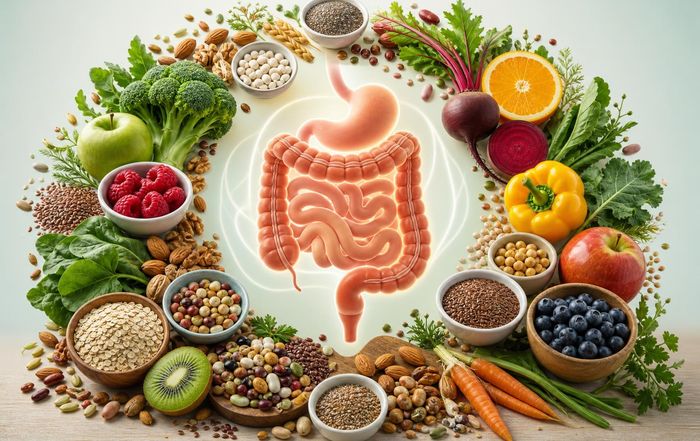
The Link Between Fiber Diversity and Digestive Health
Dietary fiber has long been associated with "regularity," but in the last decade the conversation has shifted from simply eating "enough" fiber to eating a diverse range of fibers. As research into the gut microbiome has expanded, scientists are finding that different types of fiber feed different gut microbes, and that this diversity of "fuel" may be just as important as total fiber grams for digestion, immunity, metabolic health, and even mood. Why fiber diversity matters, what the science currently shows, and how to build a more varied fiber pattern into everyday eating in a realistic, sustainable way?
What we mean by "fiber diversity"
Dietary fiber is not a single nutrient. It is an umbrella term for a broad group of non-digestible carbohydrates and related compounds found in plant foods. These compounds resist digestion in the small intestine and reach the colon, where they can be fermented by gut microbes or contribute to stool bulk.
Broadly, fiber can be grouped in several overlapping ways:
Soluble vs. insoluble: Soluble fiber dissolves in water to form a gel (e.g., oats, barley, psyllium, many fruits), while insoluble fiber does not dissolve and adds bulk (e.g., wheat bran, many vegetables, whole grains).
Fermentable vs. less fermentable: Some fibers are readily fermented by gut bacteria, producing short-chain fatty acids (SCFAs) like butyrate (e.g., inulin, resistant starch, pectins). Others are only partially fermented or mostly pass through (e.g., cellulose in wheat bran).
Specific functional types: These include inulin and fructo-oligosaccharides (FOS), galacto-oligosaccharides (GOS), resistant starch, beta-glucans, pectins, and more.
Organizations such as the U.S. National Institutes of Health and European Food Safety Authority distinguish between naturally occurring "intrinsic" fiber in whole foods and isolated or synthetic fibers added to products. Both can contribute to total fiber intake, but a pattern rich in varied whole plant foods naturally delivers a broader spectrum of fiber structures and associated phytochemicals.
When researchers talk about fiber diversity, they usually mean regularly consuming a wide range of plant foods-different fruits, vegetables, whole grains, legumes, nuts, and seeds-rather than relying on one or two staple sources or a single supplement. This variety exposes the gut microbiome to many types of fermentable carbohydrates, which appears to be central to digestive health.
How fiber diversity shapes the gut microbiome
The human colon hosts trillions of microbes from hundreds of species. These microbes rely heavily on dietary fiber as their primary energy source. Different bacteria possess different enzymes that allow them to break down specific fiber structures. As a result, the mix of fibers a person eats strongly influences which microbes thrive.
Research from large projects such as the Human Microbiome Project and the American Gut Project has shown that people who eat a greater variety of plant foods tend to have higher microbial diversity in their gut. One widely cited analysis found that individuals consuming more than 30 different plant foods per week had more diverse microbiomes than those eating 10 or fewer, regardless of whether they followed vegetarian, omnivorous, or other dietary patterns.
Higher microbiome diversity is not automatically "better" in every situation, but in many studies it is associated with:
Lower rates of inflammatory bowel disease (IBD)
Reduced risk of obesity and insulin resistance
Lower markers of systemic inflammation
Greater resilience after antibiotic use or infections
Organizations such as the World Health Organization and Food and Agriculture Organization have emphasized the importance of diets rich in varied plant foods for both human and planetary health. While these recommendations are not solely about fiber, the microbiome benefits are a major part of the rationale.
From a mechanistic standpoint, diverse fibers support a more functionally diverse microbial community. Some bacteria specialize in breaking down complex arabinoxylans from whole grains, others prefer pectins from fruit, and others thrive on resistant starch from cooled potatoes or legumes. When many substrates are present, more species can coexist, helping maintain a balanced ecosystem less prone to overgrowth of potentially harmful microbes.
Short-chain fatty acids: a key link to digestive health
One of the clearest bridges between fiber diversity and digestive health is the production of short-chain fatty acids (SCFAs)-primarily acetate, propionate, and butyrate-during microbial fermentation.
Authorities such as the Harvard T.H. Chan School of Public Health and Johns Hopkins Medicine highlight SCFAs as central to gut health for several reasons:
Butyrate is the preferred fuel for colon cells (colonocytes), supporting the integrity of the intestinal barrier, helping regulate inflammation, and potentially reducing the risk of colorectal cancer.
Acetate and propionate can influence appetite regulation, glucose metabolism, and lipid metabolism via signaling pathways between the gut and other organs.
SCFAs help maintain a slightly acidic environment in the colon, which can discourage overgrowth of certain pathogenic bacteria and fungi.
Different fiber types tend to favor different SCFA profiles and are fermented in different regions of the colon. For example, resistant starch often promotes butyrate production, while some inulins may be fermented more proximally. A mix of fibers can lead to SCFA production along more of the colon, which may be beneficial for overall digestive function and colon health.
Emerging research from institutions such as King's College London and Stanford University suggests that diets rich in a variety of whole-plant fibers can increase SCFA levels and modulate inflammatory markers. However, individual responses can vary, and not all fibers or supplements produce uniform effects across people.
Fiber diversity, bowel habits, and common digestive symptoms
For many people, the most tangible effect of fiber is on bowel habits: stool consistency, frequency, and ease of passage. Yet not all fibers act the same way, and in some conditions, focusing exclusively on "more fiber" without considering type and diversity can backfire.
Constipation and irregularity
Guidelines from bodies such as the American Gastroenterological Association and NHS in the UK typically recommend increasing fiber intake for constipation, especially from whole foods, alongside adequate fluid and physical activity. Insoluble fibers like wheat bran increase stool bulk and speed transit, while soluble, gel-forming fibers like psyllium help normalize stool consistency.
However, relying solely on one fiber source can sometimes lead to bloating or discomfort. Incorporating a range of fibers-for example, oats, fruit, vegetables, legumes, nuts, and seeds-may support more comfortable regularity while providing a broader microbiome benefit than a single supplement.
Diarrhea and loose stools
Certain soluble fibers, especially viscous, gel-forming types such as psyllium and some pectins, can absorb water and help solidify loose stools. Clinical guidelines often recommend these fibers in conditions like irritable bowel syndrome with diarrhea (IBS-D). In contrast, some rapidly fermentable fibers (such as large supplemental doses of inulin) may worsen gas or urgency in sensitive individuals.
Here, fiber diversity is about selecting appropriate types rather than maximizing variety at all costs. People with frequent loose stools may benefit from emphasizing gentler, gel-forming fibers and gradually broadening their fiber spectrum as symptoms stabilize.
Gas, bloating, and IBS
Many people with irritable bowel syndrome or functional bloating report that certain high-fiber foods trigger symptoms. Programs based on the low-FODMAP approach, developed at Monash University, temporarily reduce specific fermentable carbohydrates (including some fibers) before systematically reintroducing them to identify personal tolerances.
For these individuals, the goal is not to avoid fiber indefinitely but to rebuild a diverse, tolerable fiber pattern over time. Working with a registered dietitian familiar with IBS can be especially helpful, as too restrictive a diet may reduce microbiome diversity and long-term resilience.
Beyond digestion: systemic effects of a fiber-diverse diet
While this article focuses on digestive health, the implications of fiber diversity extend well beyond the gut. Microbiome-related research from institutions such as University College London, Mayo Clinic, and Cleveland Clinic suggests that diets rich in diverse fibers may influence:
Metabolic health: Higher fiber intake, especially from a variety of whole grains and legumes, is linked with lower risk of type 2 diabetes and improved insulin sensitivity. SCFAs appear to play a role in glucose regulation and appetite signaling.
Cardiovascular health: Soluble fibers such as beta-glucans in oats and barley, as well as pectins in fruit, can help lower LDL cholesterol. A broad plant-based pattern that includes these fibers is associated with reduced cardiovascular risk.
Immune and inflammatory responses: SCFAs help regulate immune cell activity in the gut and beyond. Some studies indicate that fiber-rich, plant-diverse diets are associated with lower levels of inflammatory markers such as C-reactive protein.
Mental health and mood: The gut-brain axis is a growing area of research. While evidence is still emerging, some observational studies and small trials suggest that microbiome-supportive diets, including those rich in diverse fibers, may be associated with lower rates of depression and anxiety, potentially via SCFAs, immune modulation, and neurotransmitter pathways.
These broader benefits align with many national and international dietary guidelines, such as the Dietary Guidelines for Americans and recommendations from Health Canada and Public Health England, which emphasize whole grains, fruits, vegetables, legumes, nuts, and seeds as cornerstones of a healthy pattern.
For readers interested in related lifestyle and wellness topics, our sections on health, wellness, and lifestyle explore how diet intersects with movement, sleep, and stress management.
How much fiber do we actually need-and how does diversity fit in?
Most health authorities still frame fiber recommendations in terms of total grams per day. For adults, typical guidance is:
Around 25 g per day for women and 38 g per day for men in the United States, according to the National Academies of Sciences, Engineering, and Medicine.
Similar ranges adjusted for energy intake in Europe and other regions.
Yet surveys from agencies such as the U.S. Centers for Disease Control and Prevention and European Food Safety Authority consistently show that many people fall well short of these targets.
Within that context, fiber diversity can be thought of as a qualitative upgrade: once someone is working toward adequate total fiber, the next step is to ensure that fiber comes from many different plant sources rather than a narrow set. For example, a diet that gets almost all fiber from wheat bread and potatoes may reach the gram target but still be relatively monotonous from a microbiome perspective.
As a practical benchmark, some researchers and clinicians have suggested aiming for 20-30 different plant foods per week, including herbs, spices, and small portions of nuts or seeds. This is not a rigid rule but a useful prompt to look at variety over the week rather than perfection at each meal.
Everyday strategies to increase fiber diversity
Building a more diverse fiber pattern does not require drastic dietary overhauls. It usually involves layering in variety within familiar meals and snacks. Some practical strategies include:
Rotating whole grains: Instead of relying solely on wheat or white rice, include oats, barley, quinoa, brown or wild rice, bulgur, and rye over the week. Whole grains provide different mixes of insoluble fiber, beta-glucans, and other polysaccharides.
Varying legumes: Alternate between lentils, chickpeas, black beans, kidney beans, and soy-based foods like edamame or tofu. Each offers distinct fibers and resistant starch profiles.
Mixing fruits and vegetables: Aim for a spectrum of colors and textures-berries, citrus, apples or pears with skin, leafy greens, cruciferous vegetables, root vegetables, and alliums like onions and garlic.
Including nuts and seeds: Small daily portions of almonds, walnuts, flaxseeds, chia seeds, or pumpkin seeds contribute unique fibers and beneficial fats.
Using herbs and spices: Even in small amounts, herbs and spices add plant diversity and polyphenols, which can interact with gut microbes.
Trying fermented plant foods: While not major fiber sources themselves, foods like sauerkraut, kimchi, and some yogurts (for those who consume dairy or plant-based alternatives) can introduce beneficial microbes that thrive on dietary fiber.
Readers exploring broader lifestyle upgrades can find complementary ideas in our mindfulness and fitness sections, where we discuss how movement and stress reduction can further support digestive function.
Whole foods vs. fiber supplements
Fiber supplements such as psyllium husk, wheat dextrin, methylcellulose, inulin, or partially hydrolyzed guar gum can be useful tools, particularly for targeted symptom relief or when dietary changes are challenging. Clinical guidelines often recommend psyllium for constipation or IBS because it is generally well-tolerated and has a strong evidence base.
However, relying exclusively on a single supplement does not provide the full spectrum of fibers and phytochemicals found in whole foods. Organizations like the World Cancer Research Fund and American Heart Association stress that whole plant foods deliver not just fiber but also vitamins, minerals, polyphenols, and other bioactive compounds that interact with the microbiome in complex ways.
Supplements may be appropriate when:
A healthcare professional recommends them for a specific condition.
Someone is unable to meet fiber needs through food alone due to appetite, accessibility, or other constraints.
A person is gradually increasing fiber and needs a controlled, standardized supplement as part of a plan.
In most cases, though, supplements are best seen as adjuncts, not substitutes, for a diet rich in varied plant foods. For those curious about how supplements fit into a broader wellness plan, our health and innovation pages often cover emerging products and technologies with a critical lens.
When more or different fiber can be a problem
Despite the many benefits, increasing fiber-especially diverse, fermentable fibers-does not suit everyone at all times. Certain medical conditions require individualized guidance from a qualified clinician or registered dietitian.
Situations where caution is essential include:
Active inflammatory bowel disease flares (Crohn's disease, ulcerative colitis): Some individuals may need temporary restrictions on insoluble or high-residue fiber to reduce mechanical irritation, under medical supervision.
Intestinal strictures, obstructions, or recent surgery: High-fiber diets may be unsafe in these contexts.
Severe IBS or functional bloating: Rapidly increasing fermentable fibers can worsen symptoms; a structured, gradual approach is usually needed.
Significant motility disorders: Conditions affecting how quickly food moves through the gut may require tailored fiber strategies.
Major health organizations such as the Mayo Clinic and Cleveland Clinic emphasize the importance of gradual increases in fiber, alongside adequate hydration, to reduce gas, bloating, or cramps. For most generally healthy adults, increasing fiber diversity slowly over several weeks allows the microbiome and gut motility to adapt.
If symptoms such as persistent pain, unexplained weight loss, rectal bleeding, or dramatic changes in bowel habits occur, it is important to seek evaluation from a healthcare professional rather than attributing everything to fiber alone.
Putting it together: a practical, flexible approach
The emerging science suggests that for digestive health, two questions matter:
Am I getting enough fiber overall?
Is that fiber coming from a wide range of plant foods?
Rather than fixating on perfect numbers, many people find it helpful to:
Use national guidelines (for example, from the World Health Organization or national health agencies) as a reference for total fiber.
Look back over a typical week and count how many different plant foods appear-fruits, vegetables, whole grains, legumes, nuts, seeds, herbs, and spices.
Make small, sustainable changes that increase both quantity and variety, such as adding one extra vegetable to a usual dish, rotating grains, or trying a new legume once a week.
Adjust according to personal tolerance, medical conditions, and cultural food traditions, ideally with professional guidance for complex digestive issues.
For people interested in how these choices intersect with broader lifestyle themes-such as sustainable food systems, travel, or global culinary traditions-our environment, travel, and world sections explore how diverse plant-based eating patterns are expressed in different cultures and ecosystems. As research into the microbiome continues, details will evolve, but one message is already clear: a varied, plant-rich diet does more than keep digestion moving. By feeding a diverse community of gut microbes, it supports a foundation for long-term health that reaches far beyond the digestive tract.