

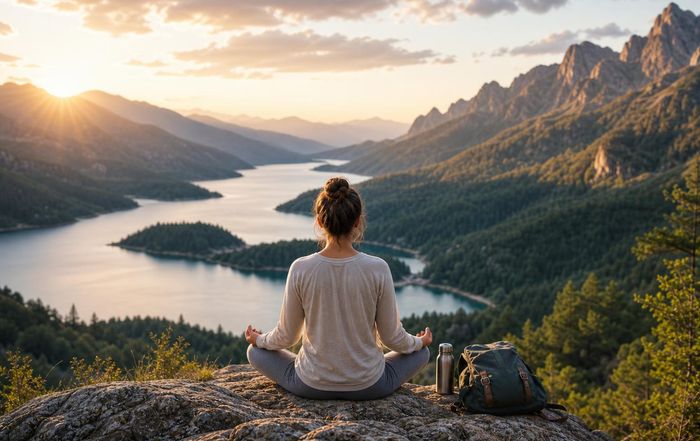
Nature Escapes That Inspire Better Health!!
The New Imperative: Reconnecting Health and Nature
Ok so as global work patterns, digital dependence and urban density continue to accelerate, a quiet but powerful counter-movement is reshaping how people think about health, performance and quality of life: the deliberate return to nature as a core pillar of wellbeing. For wellness enthusiasts, who already view wellness, health, fitness and mindful living as strategic investments rather than luxuries, nature escapes are no longer just holidays; they are carefully chosen interventions that support physical resilience, cognitive clarity, emotional balance and sustainable productivity across a lifetime.
This renewed focus on the health impact of nature is grounded in a growing body of research from institutions such as Harvard T.H. Chan School of Public Health, which has explored how exposure to green spaces correlates with lower mortality and improved mental health, and Stanford University, whose researchers have examined how time in nature reduces rumination and supports more adaptive brain activity. Readers can explore how green environments influence long-term health outcomes through resources like the Harvard School of Public Health and further examine the cognitive benefits of outdoor experiences through the Stanford Woods Institute for the Environment.
For a global audience spanning North America, Europe, Asia, Africa and beyond, the question is no longer whether nature supports health, but how to design nature escapes that are strategically aligned with personal goals, cultural preferences and professional demands. This is where the editorial mission of wellnewtime.com-to integrate wellness, health, travel, lifestyle and business thinking-becomes particularly relevant, because the most effective nature escapes are those that are intentional, evidence-informed and integrated into a broader life strategy rather than treated as isolated episodes of relief.
The Science Behind Nature-Driven Wellness
The modern case for nature escapes is built on converging scientific insights from environmental psychology, public health, sports science and neuroscience. Studies summarized by the World Health Organization highlight that access to green and blue spaces is associated with lower rates of cardiovascular disease, better sleep quality and reduced levels of stress biomarkers, suggesting that nature immersion functions as a multidimensional health intervention rather than a single-issue solution. Readers can review the global perspective on green spaces and health through the WHO environment and health resources.
At the same time, research compiled by the American Psychological Association shows that time in natural environments improves attention restoration, working memory and creativity, which is particularly relevant for professionals in high-cognitive-demand roles who seek to maintain performance without burning out. For those who wish to understand these psychological mechanisms in more detail, the APA's materials on nature and mental health offer accessible summaries of current findings.
These insights align closely with the editorial focus of the Wellness and Health sections of wellnewtime.com, where the emphasis is on practical, science-aligned strategies that readers can apply in their daily routines. Those interested in integrating nature into long-term health planning can explore additional perspectives in the health hub of wellnewtime.com and complement that knowledge with broader wellness guidance in the wellness section.
From Occasional Retreat to Strategic Health Asset
For many executives, entrepreneurs and knowledge workers across the United States, the United Kingdom, Germany, Canada, Australia and other innovation-driven economies, nature escapes have traditionally been positioned as rare, restorative breaks from high-intensity work. In 2026, a more strategic model is emerging: nature escapes are being reframed as recurring, structured components of a personal health portfolio, much like regular strength training, mindfulness practice or annual medical screening.
This shift is being reinforced by organizations such as The Global Wellness Institute, which has documented the rise of wellness tourism and the economic value of health-oriented travel experiences, demonstrating that investments in nature-based retreats can yield both personal and organizational returns in the form of reduced burnout, improved engagement and stronger retention. Those interested in macro-level trends can review the latest wellness tourism insights via the Global Wellness Institute.
On wellnewtime.com, this evolution is reflected in how nature escapes intersect with multiple verticals-wellness, travel, fitness, mindfulness and business-rather than being confined to leisure alone. Readers exploring the travel section will increasingly encounter coverage that connects destination choices to measurable health and performance outcomes, while the business section explores how leaders are redesigning work cultures to normalize periodic nature immersion as a legitimate productivity strategy.
Nature, Fitness and Longevity: Training Beyond the Gym
For fitness-oriented readers in cities from New York and London to Singapore, Tokyo and São Paulo, the gym remains an essential environment for structured training. However, there is growing recognition that outdoor movement in natural settings offers distinct physiological and psychological benefits that indoor training alone cannot fully replicate. Research highlighted by The British Journal of Sports Medicine has shown that "green exercise"-physical activity conducted in natural environments-can enhance mood, reduce perceived exertion and support adherence to regular exercise routines, which is critical for long-term health outcomes.
Endurance athletes and recreational runners alike are increasingly drawn to trail running in regions such as the Alps, the Rockies or the forests of Scandinavia, not only for performance gains but also for the meditative quality of moving through complex natural terrain. Those looking to deepen their understanding of how outdoor exercise supports longevity can consult resources from The American College of Sports Medicine, which offers guidelines on integrating varied environments into training programs, and explore practical fitness content in the fitness section of wellnewtime.com.
From a longevity perspective, organizations like Blue Zones LLC have examined how lifestyle patterns in long-lived communities often include regular walking, gardening and outdoor socializing, suggesting that nature-linked movement is not an optional enhancement but a core design principle for healthy aging. Readers interested in broader longevity science can explore the work of The National Institute on Aging through the NIA's official site and consider how nature-based movement might be integrated into their own long-term strategies.
Mindfulness in the Wild: Mental Clarity Beyond the Meditation Cushion
Mindfulness has become a central theme for the wellnewtime.com audience, with many readers already engaging in meditation apps, breathwork practices and structured retreats. In 2026, there is growing interest in extending these practices into natural settings, where the sensory richness of forests, mountains, coastlines and deserts offers unique opportunities for deepened attention and emotional regulation.
The concept of "forest bathing," or shinrin-yoku, originally developed in Japan, has been studied by the Japanese Society of Forest Medicine, which has documented reductions in cortisol levels, blood pressure and anxiety following guided forest immersion experiences. Those who wish to understand the scientific basis for these outcomes can explore related research through platforms like PubMed hosted by the U.S. National Library of Medicine, which aggregates peer-reviewed studies on nature and mental health.
For readers of wellnewtime.com, the integration of mindfulness and nature is not merely aesthetic; it is a strategic tool for cognitive renewal in an era of constant digital stimulation. The mindfulness section increasingly highlights practices such as outdoor walking meditation, mindful observation of landscapes and breathwork synchronized with natural sounds, all of which can be incorporated into short local escapes as well as longer international retreats across Europe, Asia or the Americas.
Beauty, Recovery and the Therapeutic Power of Landscape
The global beauty and spa industry, with major players such as L'Oréal, Estée Lauder and Shiseido, has long leveraged imagery of pristine beaches, alpine springs and lush forests to position products as natural and restorative. However, there is a deeper shift underway: consumers are moving beyond symbolic associations and seeking direct, embodied experiences of natural environments as part of their beauty and recovery routines.
Luxury wellness resorts in regions like Switzerland, Italy, Thailand and New Zealand are designing integrated programs that combine dermatological care, nutritional guidance, massage therapy and guided time in nature, often drawing on local traditions and ingredients. For an overview of how global spa and wellness trends are evolving, readers can refer to reports from Spa Business and Wellness Tourism Association, and then connect those insights with more personal perspectives in the beauty section of wellnewtime.com.
Massage, in particular, is being recontextualized as a bridge between physical recovery and sensory immersion in nature. Outdoor massage pavilions overlooking forests or oceans, treatments using regionally sourced botanical oils and post-treatment grounding rituals on natural surfaces are increasingly common in destinations from Bali to the Amalfi Coast. Readers who prioritize bodywork as part of their wellness regime can explore related concepts and practices in the massage section, where nature-linked recovery experiences are gaining prominence.
Sustainable Travel: Protecting the Environments That Heal Us
As more individuals recognize the therapeutic value of nature escapes, there is an equally urgent need to ensure that the destinations providing these benefits are protected, regenerated and managed responsibly. Sustainable travel has moved from niche to mainstream, with organizations like The United Nations World Tourism Organization (UNWTO) and The World Travel & Tourism Council (WTTC) emphasizing that the future of tourism depends on environmental stewardship, community engagement and climate resilience. Readers can explore the evolving standards of sustainable tourism via the UNWTO website and learn how leading companies are reshaping travel models through the WTTC.
For the wellnewtime.com audience, which spans continents and cultures, this raises a strategic question: how can one design nature escapes that support personal health while also contributing to local ecosystems and economies? The environment section increasingly covers examples of regenerative tourism initiatives, from rewilding projects in Europe to community-based conservation in Africa and marine protection programs in Asia-Pacific. These stories underscore that the most meaningful nature escapes are those that leave destinations healthier, more resilient and more prosperous than before.
Organizations such as Conservation International and The Nature Conservancy provide frameworks and case studies for travelers who wish to align their personal wellness journeys with global environmental priorities. Those who want to deepen their understanding of conservation-linked travel can explore resources from Conservation International and The Nature Conservancy, then apply that knowledge when selecting destinations, accommodations and experiences.
Urban Nature: Micro-Escapes for High-Intensity Lifestyles
While iconic escapes to remote mountains, islands or forests are compelling, they are not always practical for professionals balancing demanding jobs, family responsibilities and financial constraints. In 2026, urban planners, public health experts and wellness innovators are increasingly focused on micro-escapes: short, repeatable nature experiences embedded within or near major metropolitan areas from New York and Toronto to Berlin, Singapore and Sydney.
Cities such as Singapore and Copenhagen have become global exemplars of biophilic urban design, integrating green corridors, waterfront promenades and accessible parks into dense urban fabrics, thereby enabling residents to access nature benefits without extensive travel. Those interested in how cities are transforming themselves into healthier environments can explore case studies through C40 Cities, a network of global cities committed to climate action, via the C40 Cities website.
For readers of wellnewtime.com, these urban nature strategies align with the platform's emphasis on realistic, everyday wellness. The lifestyle section often highlights how short walks in nearby parks, lunchtime visits to botanical gardens or weekend hikes on local trails can cumulatively deliver many of the same psychological and physiological benefits as longer retreats, especially when combined with mindful presence and digital boundaries.
Corporate Strategy: Nature Escapes as a Business Advantage
In competitive markets across North America, Europe and Asia, leading organizations are rethinking their approach to employee wellbeing, recognizing that talent retention, creativity and resilience are now core strategic assets. Nature-based experiences are increasingly integrated into corporate wellbeing programs, leadership development initiatives and team-building retreats, reflecting a shift from purely transactional perks toward deeper investment in human sustainability.
Companies such as Salesforce, Google and Unilever have experimented with wellness-oriented campuses, nature-inspired workspaces and offsite retreats in natural settings, often reporting improved engagement and innovation outcomes. Business leaders seeking evidence-based approaches can consult resources from McKinsey & Company, which has explored the economic value of workplace wellbeing, and from Deloitte, which has analyzed the ROI of mental health investments; these firms provide insights that help executives justify nature-linked programs to boards and shareholders. Learn more about sustainable business practices through resources provided by McKinsey and Deloitte.
For entrepreneurs, executives and HR leaders who follow wellnewtime.com, the convergence of wellness, nature and business is a key area of interest. The business section increasingly covers case studies of companies that integrate regular nature escapes into corporate culture, from Nordic firms offering wilderness retreats to tech companies in California and South Korea experimenting with digital-detox offsites in national parks. These initiatives demonstrate that nature escapes can function not only as individual health strategies but also as competitive differentiators in global talent markets.
Innovation, Brands and the Future of Nature-Centric Experiences
The intersection of nature, technology and wellness is rapidly evolving, with innovators across Europe, Asia, North America and Oceania developing new tools and experiences that make nature escapes more accessible, personalized and measurable. Start-ups and established brands alike are experimenting with biofeedback-enabled retreats, nature-based virtual reality for individuals who cannot travel, and data-driven platforms that track the impact of outdoor experiences on sleep, stress and productivity.
Organizations such as MIT Media Lab and ETH Zurich are exploring how sensors, wearables and immersive technologies can be used to study and enhance human-nature interactions, while global travel and hospitality brands are partnering with health experts to design programs that go beyond traditional tourism. Readers interested in how innovation is reshaping wellness can explore the innovation section of wellnewtime.com, where emerging technologies are evaluated through the lens of real-world health impact rather than novelty alone.
At the same time, major wellness and outdoor brands-from Patagonia and The North Face to Lululemon and Nike-are refining their narratives to emphasize environmental responsibility, mental health and community building alongside performance. Those curious about how leading brands are positioning themselves in this space can follow developments through industry news and then connect those insights with curated brand stories in the brands section, where nature-aligned values increasingly serve as markers of authenticity and trust.
Designing a Personal Nature Escape Strategy
For the global readers of wellnewtime.com, the most important question is intensely personal: how can nature escapes be integrated into an already complex life in a way that is realistic, sustainable and aligned with individual goals? The answer lies in approaching nature not as a rare luxury but as a continuum of experiences, ranging from daily micro-contacts with urban green spaces to quarterly regional retreats and occasional transformative journeys to distant landscapes.
Those seeking to design such a strategy can begin by clarifying their primary objectives-whether stress reduction, physical conditioning, creative renewal, relational bonding or spiritual exploration-and then matching those objectives to specific environments and formats. Resources from organizations such as The Mayo Clinic can help individuals understand how different forms of physical activity and rest affect health, while guidance from Headspace Health and similar mindfulness platforms can support the mental and emotional dimensions of nature immersion. Learn more about evidence-based self-care approaches through the Mayo Clinic.
On wellnewtime.com, this integrative perspective is reflected across multiple sections, from wellness and health to travel and lifestyle, creating a cohesive editorial ecosystem that supports readers in moving from inspiration to implementation. By engaging with this content regularly, individuals can refine a personal nature escape portfolio that evolves with changing life stages, career demands and global conditions.
A Global, Connected Future of Nature-Inspired Health
The convergence of scientific validation, corporate strategy, consumer demand and environmental urgency is elevating nature escapes from optional indulgence to essential infrastructure for human health and performance. For a worldwide audience-from the United States and Canada to the United Kingdom, Germany, France, Italy, Spain, the Netherlands, Switzerland, the Nordics, China, Japan, South Korea, Singapore, Thailand, South Africa, Brazil, Malaysia, New Zealand and beyond-nature is emerging as a shared, universal resource that transcends cultural and economic differences while inviting localized expression.
This site occupies a distinctive position in this landscape, curating insights at the intersection of wellness, health, fitness, mindfulness, travel, beauty, business, brands, lifestyle, environment, massage, world affairs, innovation and careers. Fans can stay informed about evolving trends and opportunities through the news section and explore how global developments-from climate policy to tourism regulation and health innovation-shape the future of nature-driven wellbeing in the world section.
Ultimately, nature escapes that inspire better health are not simply about visiting beautiful places; they are about entering into a more conscious, reciprocal relationship with the living world, one that supports individual vitality while contributing to planetary resilience. For professionals, families and communities navigating an increasingly complex century, this redefined relationship with nature may prove to be one of the most strategic investments they can make, and wellnewtime.com will continue to serve as a trusted guide in translating that vision into informed, practical and inspiring action.