

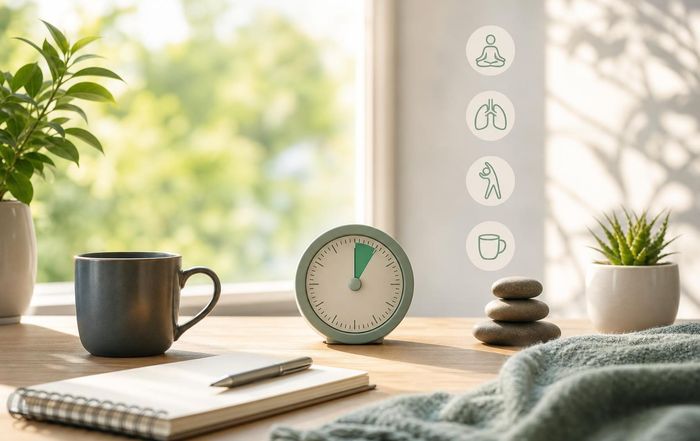
Microbreaks for Wellbeing: What to Do in Five Minutes
Long stretches of focus are often celebrated as a sign of productivity, yet research over the past decade suggests that the human brain and body are not built for uninterrupted work. Short, intentional pauses-often called microbreaks-can support mental clarity, physical comfort, and emotional balance without significantly reducing output. In many cases, they appear to enhance it. For people working at a desk, on their feet, or juggling caregiving responsibilities, knowing how to use just five minutes well can make the difference between finishing the day drained or feeling relatively steady and clear.
Microbreaks are typically defined as brief, informal breaks lasting from a few seconds to around ten minutes, taken between work tasks rather than as formal rest periods. Studies from organizations such as the U.S. National Institutes of Health and European occupational health agencies suggest that these short pauses can help reduce musculoskeletal strain, eye fatigue, and perceived stress, while supporting sustained attention. They are not a cure-all for burnout or structural workplace issues, but they can be a practical tool for day-to-day wellbeing. This article explores how microbreaks work, what to do in five minutes, and how to weave them into real-world routines without feeling less productive or guilty for stepping away. For people interested in broader self-care strategies beyond the workday, our wellness, mindfulness, and lifestyle sections offer additional context on building a more balanced life.
Why microbreaks matter more than you think
The modern work environment-whether a digital office, clinic, classroom, or factory floor-often pushes people toward continuous engagement. Yet cognitive science indicates that attention naturally waxes and wanes over time. Research summarized by organizations such as the American Psychological Association and Harvard Medical School suggests that mental performance typically declines after prolonged, unbroken focus, with more errors, slower reaction times, and a tendency toward mind-wandering or emotional reactivity. Microbreaks appear to interrupt this downward drift, allowing the nervous system to reset before fatigue becomes overwhelming.
Physically, even a few minutes of movement can counteract some of the immediate strain of sedentary work. Agencies like the World Health Organization and U.S. Centers for Disease Control and Prevention highlight how prolonged sitting is linked with back pain, neck tension, and higher long-term cardiometabolic risk, especially when combined with low overall physical activity. While microbreaks cannot replace regular exercise, they can ease muscle stiffness, promote circulation, and reduce the cumulative stress on joints and tendons, particularly for people who spend hours at a screen or performing repetitive tasks.
On the emotional side, microbreaks can act as small pressure valves. Short pauses to breathe, step outside, or connect briefly with a supportive colleague can reduce perceived stress, which organizations such as Mental Health America and the UK's National Health Service identify as a major contributor to anxiety, sleep problems, and burnout. Importantly, microbreaks do not need to be elaborate. The key ingredients are a shift of posture or environment, a temporary disengagement from the main task, and a brief moment of intentional recovery rather than scrolling aimlessly on another screen.
Readers who want to explore how these small shifts fit into a broader approach to physical activity may find useful ideas in our fitness and health coverage, where movement, ergonomics, and everyday habits are discussed in more depth.
How often to take microbreaks-and how long they should last
There is no single scientifically perfect break schedule that applies to everyone, but several patterns emerge in occupational health research and ergonomic guidelines. Many experts suggest that taking a short break every 30-60 minutes of focused work can be beneficial, especially for screen-based or repetitive tasks. For example, some European ergonomics recommendations propose a few minutes away from the primary task each hour, while productivity frameworks such as the Pomodoro Technique popularize cycles of roughly 25 minutes of work followed by a 5-minute break. Official health agencies like Safe Work Australia and national occupational safety institutes in Europe and North America offer similar guidance, emphasizing regular micro-pauses rather than only one long lunch break.
In practice, the ideal rhythm depends on the type of work and the individual. High-intensity cognitive tasks may benefit from slightly longer work blocks and slightly longer breaks, while physically demanding roles may call for more frequent pauses to stretch and hydrate. What matters most is consistency and intention: a pattern where breaks are expected and normalized rather than treated as a sign of weakness or lack of commitment. For many people, an achievable starting point is a 5-minute microbreak every 50-60 minutes, adjusted over time based on how they feel and perform.
It is also important to distinguish between restorative microbreaks and pseudo-breaks that keep the brain in a similar state of stimulation. Quickly checking personal social media or news feeds, for example, may not provide genuine recovery, as it often continues to pull on attention and emotions. A microbreak that involves moving the body, softening the gaze, or gently shifting to a different sensory input is more likely to help. For those exploring healthier work habits or job design changes, our business and jobs sections often examine how workplaces can support more sustainable performance.
Five-minute movement resets
One of the most effective uses of a microbreak is simply to move. Physical activity, even at low intensity, can improve circulation, reduce stiffness, and help clear mental fog. Guidance from organizations such as the World Health Organization, American College of Sports Medicine, and National Health Service emphasizes that "every move counts," particularly for people who spend many hours sitting. Five minutes is enough time to interrupt sedentary behavior without needing a change of clothes or a gym.
A simple option is a slow walk, ideally away from screens and, if possible, near a window or outdoors. Walking down a corridor, stepping outside the building, or going up and down a few flights of stairs can elevate the heart rate slightly and engage different muscle groups. For those in small spaces, marching in place, gentle knee lifts, or shifting weight from one foot to the other can still be helpful. The goal is not to break a sweat but to remind the body that it can do more than hunch over a keyboard. People with mobility limitations can adapt these ideas with seated movements, such as rolling shoulders, rotating ankles, and reaching arms overhead within a comfortable range.
Stretching is another accessible movement reset. Occupational health bodies and physiotherapy organizations often recommend simple stretches for the neck, shoulders, wrists, and lower back for desk workers, and for the calves, hips, and hands for people who stand for long periods. In five minutes, it is possible to rotate through a few slow neck turns, shoulder rolls, wrist circles, and gentle forward folds or side bends, pausing if any movement causes pain. Those interested in building a more deliberate stretching or recovery routine might explore related content in our massage and wellness sections, where bodywork and self-care techniques are discussed in more detail.
For people who enjoy structure, some public health agencies and fitness organizations provide short, low-impact movement sequences that can be done in ordinary clothes, such as chair squats, wall push-ups, or calf raises. Reputable sources like Mayo Clinic, Cleveland Clinic, and national physiotherapy associations often publish simple routines that can be adapted to different fitness levels. The core principle is to respect current abilities, avoid sudden, intense exertion during a brief work break, and focus instead on smooth, controlled movements that leave the body feeling more open and awake rather than exhausted.
Five-minute breathing and mindfulness practices
Not every microbreak needs to be physically active. For many people, the nervous system is under constant low-grade pressure from deadlines, notifications, and background worries. Short, structured breathing exercises and mindfulness practices can help shift the body away from a stress-dominant state and toward a calmer, more balanced mode. Organizations such as Harvard Medical School, Johns Hopkins Medicine, and Mindful.org highlight how even a few minutes of slow, deliberate breathing can lower heart rate, reduce perceived stress, and improve emotional regulation, at least in the short term.
One accessible technique is simple counted breathing. Sitting or standing comfortably, a person can inhale through the nose for a count of four, pause briefly, and exhale gently through the mouth for a count of six or eight, repeating for several cycles. The extended exhale is thought to stimulate the parasympathetic nervous system, which supports relaxation. Another option is "box breathing," sometimes used in clinical and performance contexts: inhale for four counts, hold for four, exhale for four, hold for four, and repeat. These patterns can be adjusted to suit individual comfort, especially for those with respiratory or cardiovascular conditions, and should never be forced.
Mindfulness microbreaks can be as simple as paying attention to the sensations of the body sitting on a chair, the feeling of feet on the floor, or the sounds in the room for a few minutes without trying to change anything. Rather than erasing thoughts, the intention is to notice them and gently return attention to a chosen anchor, such as the breath or bodily sensations. Evidence from institutions like UCLA Health and Oxford Mindfulness Centre suggests that regular mindfulness practice may support stress management and emotional resilience over time, though it is not a substitute for professional care when needed. For those curious about integrating these practices into daily routines, our mindfulness and health sections explore related techniques and their potential benefits.
Some people find that combining light movement with mindful awareness works best. Standing up, taking a few slow shoulder rolls, and synchronizing each movement with an inhale or exhale can create a simple, embodied practice that feels less abstract than seated meditation. Others may prefer a brief body scan, mentally traveling from head to toe and noticing areas of tension without judgment. The emphasis is on gentle curiosity rather than performance: there is no "perfect" way to do a five-minute mindfulness break, only experiments that feel more or less supportive.
Visual and digital breaks to rest the eyes and brain
In a world where many jobs involve staring at screens for long periods, microbreaks that rest the eyes and reduce digital load can be especially valuable. Organizations such as the American Academy of Ophthalmology and Royal National Institute of Blind People recommend the "20-20-20 rule" as a simple guideline: every 20 minutes, look at something at least 20 feet (around 6 meters) away for about 20 seconds. This shift allows the eye muscles that control focus to relax briefly, which may reduce digital eye strain, headaches, and blurred vision associated with prolonged near work.
In a five-minute break, this principle can be extended into a more complete visual rest. Stepping away from the screen, looking out a window at distant objects, and allowing the gaze to soften without focusing sharply on any one point can help. Some people find it useful to close their eyes for a short period, covering them lightly with the palms (without pressing) to block light and encourage relaxation. For contact lens wearers or people with dry eyes, blinking deliberately and perhaps using prescribed lubricating drops during a break can also be helpful, following advice from their eye-care professional.
Digital breaks are not only about the eyes. Cognitive scientists and mental health organizations, including APA and Mental Health Foundation, note that constant switching between apps, notifications, and tasks can increase cognitive load and stress. A microbreak that is truly digital-free-even for just five minutes-can give the brain a chance to process and reset. This might mean leaving the phone at the desk while walking, turning away from multiple monitors, or using a simple analog object (like a notebook, plant, or glass of water) as the focus of attention instead of another screen.
For readers exploring broader digital wellbeing-such as managing notifications, social media use, or work-life boundaries-our lifestyle and news sections periodically cover trends and guidance in this area, including how organizations and policymakers are responding to the challenges of an "always on" culture.
Social and emotional microbreaks
Human connection is a powerful buffer against stress, and even brief positive interactions can influence mood and resilience. Public health bodies like the World Health Organization and mental health charities such as Mind and Mental Health America emphasize that social support is linked with better mental health outcomes and can help people cope with work-related pressures. A five-minute break can be an opportunity to nurture these micro-connections, provided they feel safe and supportive.
One option is a short, friendly check-in with a colleague, housemate, or family member. This might involve sharing a quick update, a light moment, or simply asking how the other person is doing. The aim is not to solve major problems in five minutes but to remind both people that they are not alone. For remote workers, this might take the form of a brief voice message, a non-urgent chat, or a camera-off audio call that allows both parties to step away from staring at themselves on screen. However, if social interactions at work feel draining or tense, it can be equally valid to use a microbreak for solitude instead.
Emotional microbreaks can also involve self-compassion practices. Some psychologists and organizations such as the Center for Mindful Self-Compassion highlight the value of brief exercises where people acknowledge their stress, recognize that difficulty is part of common humanity, and offer themselves a kind phrase rather than harsh self-criticism. In five minutes, this might look like silently naming what is happening ("This is a tough moment"), placing a hand on the chest or another comforting gesture if it feels appropriate, and repeating a phrase such as "May I be patient with myself" or "I am doing the best I can with the resources I have today."
For those interested in how emotional wellbeing intersects with broader lifestyle choices-such as travel, environment, or community engagement-our world and environment sections occasionally explore how social context and surroundings shape mental health and resilience, complementing more individual-level strategies like microbreaks.
Creative and sensory resets
Not all restorative breaks need to be explicitly about health practices like stretching or breathing. For many people, a short dose of creativity or sensory pleasure can be just as effective at shifting mental gears and reducing stress. Occupational psychologists and wellbeing researchers sometimes describe this as "micro-recovery," where small enjoyable experiences during the day help replenish psychological resources.
In five minutes, this might mean doodling freely on a piece of paper, writing a couple of lines in a personal journal, or sketching a simple object on the desk. The point is not artistic quality but playfulness and expression. Engaging different parts of the brain-visual, tactile, imaginative-can offer a contrast to analytical or repetitive tasks. Similarly, listening to a single piece of calming or uplifting music, ideally without multitasking, can create a brief emotional reset. Music therapists and organizations such as the American Music Therapy Association note that music can influence heart rate, mood, and perceived stress, though responses are highly individual.
Sensory microbreaks can also involve smell, touch, or taste. Slowly drinking a glass of water or a non-caffeinated beverage, noticing the temperature and texture, can double as a hydration check. A small piece of fruit or a snack chosen mindfully-rather than stress-driven grazing-can provide both nourishment and a moment of grounded attention, aligning with nutrition guidance from bodies like the Academy of Nutrition and Dietetics. For those drawn to tactile experiences, briefly massaging the hands, temples, or jaw muscles, within personal comfort, can help release tension; readers can find complementary ideas in our massage and beauty coverage, where self-massage and skincare rituals are sometimes explored as part of broader self-care.
It is worth noting that not all pleasant activities are equally restorative in a microbreak context. Fast-paced gaming, emotionally charged media, or multitasking with multiple tabs open may feel engaging but can keep the nervous system in a heightened state. Choosing lower-intensity, grounding activities for these short pauses tends to be more in line with what stress researchers and occupational health professionals describe as effective micro-recovery.
Making microbreaks work in real-world schedules
Knowing what to do in a five-minute break is only half the challenge; the other half is actually taking the break. Many people feel pressure-from external expectations or internal beliefs-to stay constantly available or to prove their commitment by working through discomfort. Yet occupational safety bodies, labor regulators, and major health organizations broadly agree that rest is not a luxury but a basic requirement for safe, sustainable work. Integrating microbreaks into real-world schedules often involves small structural changes and clear communication rather than dramatic overhauls.
One practical strategy is to schedule microbreaks in the same way as meetings or tasks, at least initially. Setting gentle reminders on a phone, computer, or smartwatch-ideally with notifications that are easy to ignore or dismiss when unsafe but consistent enough to form a habit-can help. Some people find it useful to pair breaks with natural task boundaries, such as after finishing a report section, completing a client call, or reaching a milestone in manual work. Over time, the body itself may begin to signal when it is time to pause, through signs like eye strain, restlessness, or difficulty concentrating.
Workplace culture plays a major role. Teams and managers who model taking short breaks, encourage standing up during long meetings, or build brief pauses into schedules send a strong signal that wellbeing is valued. Organizations that consult occupational health experts or follow guidance from bodies like OSHA, Health and Safety Executive, or national labor ministries may integrate microbreaks into formal policies, especially in roles with repetitive or high-strain tasks. For individuals without much control over their schedule, small adaptations-like using bathroom trips as opportunities for a few extra stretches or breaths-can still make a difference, even if ideal break patterns are not possible.
Finally, it is important to recognize that microbreaks are a supplement, not a substitute, for deeper rest and structural change. They cannot fully offset chronic overwork, unsafe conditions, or systemic stressors such as job insecurity and discrimination. However, within those broader realities, they can offer moments of relief and agency. Combined with longer, more intentional recovery time outside work-sleep, leisure, movement, social connection-they can help people navigate demanding days with a little more steadiness.
For happy people exploring how personal habits intersect with broader trends in work, innovation, and wellbeing, our innovation, business, and world sections regularly examine how technology, policy, and culture are reshaping daily life. Five minutes may not sound like much, but repeated throughout a day, these moments add up. A short walk, a few slow breaths, a gaze out of the window, a gentle stretch, or a brief kind word to oneself can each act as a small anchor. Over weeks and months, these microbreaks can help protect attention, ease physical strain, and make demanding days feel more humane. They are not about perfection or rigid routines, but about noticing the body's need to pause-and giving it permission to do so!