

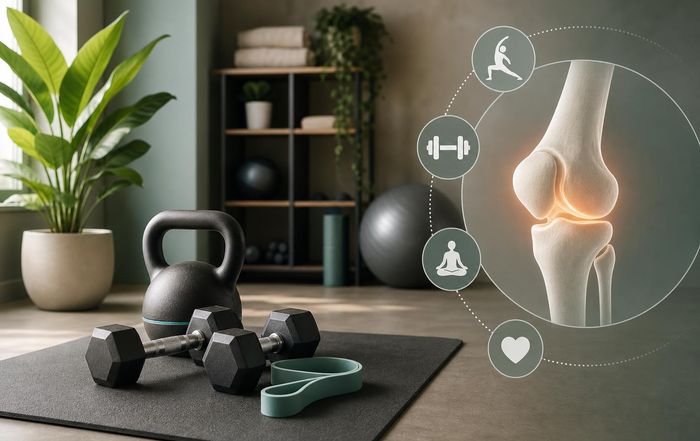
A Beginner's Guide to Joint-Friendly Strength Training
Starting strength training can feel intimidating when knees, shoulders, hips, or your lower back already ache. Yet for many people, the right kind of strength work is one of the most effective ways to reduce joint pain, improve mobility, and stay active with confidence. The key is not to avoid exercise, but to shift toward joint-friendly strategies that respect how your body feels today while building resilience for the future.
This guide brings together current research, clinical recommendations, and practical coaching principles to help beginners design a strength routine that supports their joints instead of stressing them. It is relevant whether someone is dealing with early osteoarthritis, recovering from minor injuries, or simply feels "creaky" after long days at a desk.
For broader background on how strength work fits into a healthy lifestyle, readers may also be interested in the site's top pages on wellness, health, and fitness.
Why Strength Training Can Help Aching Joints
Many people assume that if joints are sore, they should avoid lifting weights or doing resistance exercise. However, organizations such as the World Health Organization and American College of Sports Medicine recommend regular strength training for most adults, including many with stable joint conditions, because stronger muscles support and protect the joints they cross.
When muscles around a joint are weak, everyday forces from walking, climbing stairs, or lifting objects are absorbed more directly by cartilage, ligaments, and joint surfaces. Over time, this can contribute to pain and stiffness. Targeted strength work builds the surrounding muscles and improves neuromuscular control, which can reduce joint loading and improve stability. For example, strengthening the quadriceps and hip muscles is a core part of many evidence-based programs for knee osteoarthritis endorsed by groups such as Versus Arthritis in the UK and the Arthritis Foundation in the US.
Beyond mechanical support, resistance training can improve body composition, blood sugar regulation, and inflammation markers, all of which affect joint health. Research summarized by the National Institutes of Health suggests that regular, appropriately dosed strength exercise can reduce pain and improve function in conditions like osteoarthritis and chronic low back pain. The important caveat is that programs must be tailored to the individual-intensity, range of motion, and exercise selection matter far more than simply "lifting weights."
For readers interested in the broader lifestyle context-nutrition, sleep, and stress management-all of which interact with pain and recovery, the lifestyle and mindfulness sections offer complementary perspectives.
Understanding Joint Stress: Load, Angle, and Volume
"Joint-friendly" does not mean "easy" or "ineffective." It means being strategic about how stress is applied so that tissues adapt rather than become irritated. Three main variables shape how a movement feels at a joint: load, angle, and volume.
Load refers to how much resistance is used-free weights, machines, resistance bands, or body weight. Heavier loads can be safe when technique is solid and joints are healthy, but for beginners with pain or stiffness, moderate loads performed with control are usually more appropriate. Many clinical guidelines, including those from NICE in the UK, support strengthening at moderate intensity (about 5-7 out of 10 effort) for people with osteoarthritis, provided exercises are progressed gradually.
Joint angle and range of motion determine how compressed or stretched structures around a joint become during movement. Deep knee bends, extreme overhead positions, or very wide stances may increase joint stress for some people. Modifying depth-for instance, doing a half squat instead of a full squat-or adjusting hand and foot positions can dramatically change how a joint experiences load. A physiotherapist or qualified trainer can help identify tolerable ranges and angles, but beginners can also self-experiment by making small adjustments and monitoring symptoms.
Volume is the total amount of work-how many sets, repetitions, and sessions per week. Joints often tolerate a moderate amount of work well but react poorly to sudden spikes. Rather than jumping into long, daily sessions, it is usually better to start with two to three non-consecutive days per week, one to two sets per exercise, and a repetition range that allows good form (often 8-12 reps), then build up slowly. Pain that increases slightly during exercise but settles within 24 hours is often acceptable; pain that spikes sharply, lingers, or worsens session to session is a sign to adjust volume or exercise choice.
Readers looking for structured approaches to pacing and gradual progression may find additional context in our wellness and health coverage, especially around chronic conditions and self-management strategies.
General Safety Principles Before You Start
Before beginning any new exercise program, especially with existing joint issues or chronic health conditions, it is wise to check in with a health professional. Organizations like the Centers for Disease Control and Prevention (CDC) and Mayo Clinic recommend medical clearance for people with unexplained joint swelling, recent joint surgery, unstable heart or lung conditions, or symptoms like unexplained weight loss, fever, or night pain. A consultation with a physician, sports medicine doctor, or physiotherapist can clarify what is safe and whether any specific movements should be avoided or modified.
For most otherwise healthy adults with mild to moderate joint discomfort, several safety principles apply. First, warm-up thoroughly. Five to ten minutes of low-impact activity like easy cycling, walking, or dynamic range-of-motion movements increases blood flow and lubricates joints with synovial fluid, making tissues more resilient to load. Second, prioritize form over weight. Using lighter loads while learning technique reduces the risk of compensations that can overload vulnerable areas like the lower back or shoulders. Third, avoid holding your breath during effort; a steady exhale on exertion helps manage blood pressure and trunk stability.
Pain management is another key element. Leading arthritis organizations, including the Arthritis Foundation and Versus Arthritis, often use a simple guideline: some discomfort (up to about 5 out of 10) during or after exercise can be acceptable, but intense or sharp pain is not. If pain spikes suddenly, radiates, or is accompanied by swelling, redness, or joint locking, stop the exercise and seek advice. Similarly, if a particular movement consistently worsens joint symptoms even after reducing load and range of motion, it may need to be replaced with a more suitable alternative.
Finally, consider your broader recovery habits. Sleep, nutrition, and stress all influence how joints feel. Elevated stress hormones and poor sleep can increase pain sensitivity, while inadequate protein intake can slow muscle repair. Resources in our wellness and environment sections explore how living conditions, daily routines, and stress exposure shape overall health, including musculoskeletal comfort.
Key Principles of Joint-Friendly Strength Training
Designing a joint-friendly program is less about finding a single "magic" exercise and more about following a set of guiding principles that can be applied to many movements and equipment choices. Several themes emerge consistently in research and clinical practice.
One is choosing low-impact over high-impact modalities. Strength training itself is usually low impact, but some forms-such as plyometric jumps or fast, ballistic lifts-create high ground reaction forces and rapid deceleration demands on joints. Beginners with joint sensitivity are generally better served by controlled movements without jumping or sudden direction changes, at least initially. Machines, resistance bands, cables, and body-weight exercises that keep both feet on the ground can all be effective.
Another principle is emphasizing joint alignment and muscle balance. Many joint complaints are aggravated when one muscle group overpowers another or when alignment is consistently off during movement. For example, strengthening both the front and back of the shoulder, or both quadriceps and hamstrings, promotes more even forces across joints. Paying attention to knee-over-toe alignment in squats and lunges, neutral spine in hip hinges and rows, and shoulder blade positioning in pressing and pulling exercises can significantly reduce strain. Educational materials from organizations like Physiopedia and major health systems such as Cleveland Clinic often highlight these alignment cues.
Progressive overload-the gradual increase of challenge over time-is still important, but for joint-friendly training, progression can come from multiple sources, not just heavier weights. Slowing the tempo, adding a pause at the hardest part of a movement, increasing repetitions within a comfortable range, or improving single-leg balance can all enhance stimulus without dramatically increasing peak joint load. This flexibility is particularly useful for older adults or those with chronic conditions.
Finally, consistency outweighs intensity. Evidence from long-term exercise trials in arthritis management indicates that regular, moderate sessions yield better pain and function outcomes than sporadic, intense workouts. A realistic plan that fits into weekly routines-perhaps 20-40 minutes of strength work, two or three times per week-tends to be more sustainable than ambitious but short-lived efforts. For many readers, weaving these sessions into a broader active lifestyle that might include walking, cycling, yoga, or swimming can be both protective and enjoyable. Our travel and world coverage often touches on how different cultures integrate movement into daily life, offering further inspiration.
Choosing Joint-Friendly Exercises by Body Region
While individual needs vary, some movement patterns are generally more joint-friendly for beginners, especially when performed with controlled tempo and appropriate load. The following overview is not a prescription but a starting framework that can be adapted with professional guidance.
For knees and hips, many people tolerate partial-range squats, sit-to-stand movements from a chair, and hip hinges (such as Romanian deadlifts with light weights) better than deep squats or forward lunges. Using a box or bench behind you can limit depth and provide a sense of security. Side-lying leg lifts, glute bridges, and step-ups to a low platform are also common choices in physiotherapy settings. These exercises emphasize the large hip and thigh muscles that stabilize the knee and pelvis without forcing extreme joint angles. Guidance from institutions like Hospital for Special Surgery and Mayo Clinic often highlights similar patterns.
For shoulders, pain often arises from overhead positions or movements that place the arm far behind the body. Beginners might start with rowing motions (seated row, resistance band row), gentle chest presses, and lateral raises kept below shoulder height. Emphasizing scapular (shoulder blade) control-gently pulling the shoulder blades down and together during pulling exercises-can improve mechanics and reduce impingement risk. Wall slides, light band external rotations, and isometric holds can build endurance in the rotator cuff and postural muscles without aggressive loading.
Lower back-friendly options generally focus on hip-dominant movements and core stability rather than repetitive spine flexion or heavy twisting. Bird-dog variations, side planks with knees bent, and dead bugs are frequently used in back-care programs recommended by organizations like Spine-health and major hospital systems. When hinging or picking up weights, maintaining a neutral spine and allowing the hips to move back and down can reduce shear forces on the lumbar spine. Many people find that starting with very light loads or even just body weight while mastering the hip hinge pattern pays dividends later.
For wrists and elbows, grip-intensive exercises or those requiring extreme extension (such as full push-ups on the floor) can sometimes be uncomfortable. Using dumbbells or push-up handles to keep wrists more neutral, choosing neutral-grip pulling and pressing variations, and occasionally using wrist wraps or thicker handles can reduce strain. Isometric holds-where the joint angle does not change-can be particularly useful in early stages of tendinopathy rehabilitation, although specific rehab should be guided by a clinician.
Readers curious about integrating these patterns into broader routines that also support mental well-being may find useful context in our mindfulness and massage sections, where movement, body awareness, and recovery are often discussed together.
Sample Beginner Joint-Friendly Strength Routine
A sample routine can illustrate how these principles come together. This is not individualized medical advice, but a template that a reader could discuss with a physiotherapist, personal trainer, or healthcare provider and then adapt as needed. The focus is on full-body training two to three times per week, with at least one day of rest between sessions.
Each session might begin with five to ten minutes of warm-up: gentle walking, cycling, or elliptical work, followed by dynamic movements such as leg swings within a comfortable range, arm circles, and hip circles. The goal is to feel slightly warm and looser, not fatigued. After the warm-up, a circuit of six to eight exercises could be performed, with one to two sets of 8-12 controlled repetitions for each movement, resting 30-90 seconds between exercises.
A joint-friendly lineup might include a sit-to-stand from a chair or box squat; a supported row using a resistance band or cable; a wall or inclined push-up; a glute bridge on the floor or bench; a standing band or light dumbbell shoulder raise kept below shoulder height; a core stability exercise such as a bird-dog or dead bug; and a calf raise holding onto a stable surface. The emphasis would be on smooth, pain-free motion, stopping each set when technique deteriorates rather than pushing to absolute failure.
On subsequent weeks, progression could involve adding a second set to some exercises, slightly increasing resistance, or slowing the lowering phase to three or four seconds. If an exercise consistently provokes joint discomfort beyond mild, short-lived soreness, options include reducing range of motion, decreasing load, or substituting a similar pattern-for instance, swapping lunges for step-ups or replacing overhead pressing with a landmine press variation if available. Over time, as confidence and tolerance grow, more challenging variations can be introduced under guidance.
To place this in a broader health context, combining such a routine with regular low-impact aerobic activity aligns well with recommendations from the World Health Organization and national public health agencies. Readers exploring how to fit strength work alongside walking, cycling, or swimming may find additional ideas in our fitness and health coverage.
When to Seek Professional Help
While many people can safely begin joint-friendly strength training on their own, certain situations warrant professional support. Sudden onset of severe joint pain, visible deformity, marked swelling, or inability to bear weight should prompt urgent medical assessment, as recommended by bodies such as the NHS and CDC. Similarly, if a joint locks, repeatedly gives way, or is associated with systemic symptoms like fever, night sweats, or unintended weight loss, a clinician should evaluate for underlying conditions beyond simple mechanical pain.
Even without red-flag symptoms, guidance from a physiotherapist, certified strength and conditioning specialist, or other qualified professional can be especially valuable for people with long-standing pain, past surgeries, inflammatory conditions like rheumatoid arthritis, or complex multi-joint issues. These professionals can assess movement patterns, identify muscular imbalances, and design a phased program that respects flare-ups and individual goals. Many national physiotherapy associations, such as the American Physical Therapy Association and Chartered Society of Physiotherapy, offer directories to help locate qualified practitioners.
In some healthcare systems, structured exercise programs for arthritis or chronic back pain are available through hospitals, community centers, or insurance-funded initiatives. These group-based options can provide supervision, social support, and a graded progression that many individuals find motivating. For readers interested in the intersection of health, policy, and business around such programs, our business and innovation sections often examine how healthcare services and wellness offerings are evolving.
Finally, if fear of movement (kinesiophobia) or past negative experiences with exercise are major barriers, psychological support or pain education resources can make a meaningful difference. Research shared by institutions like Stanford Medicine and Harvard Health Publishing highlights the role of beliefs and expectations in chronic pain. Cognitive-behavioral approaches, mindfulness-based stress reduction, and graded exposure to feared movements can all help individuals regain trust in their bodies.
Integrating Joint-Friendly Training Into a Sustainable Lifestyle
The most effective joint-friendly strength program is one that becomes a sustainable part of daily life rather than a short-term project. That often means starting smaller than expected, focusing on consistency, and accepting that some weeks will go better than others. Tracking how joints feel-not just during workouts but over the following 24-48 hours-can guide adjustments and help identify patterns. Many people find that pairing strength sessions with existing routines, such as after a regular walk or at a set time of day, improves adherence.
Recovery practices also matter. Gentle stretching, self-massage techniques, or professional bodywork can complement strength training by easing muscle tension and supporting circulation. Our massage and wellness sections explore various approaches to recovery, from traditional massage to newer modalities, along with considerations about evidence and safety. Adequate hydration, balanced nutrition, and sleep hygiene remain foundational, especially for older adults or those juggling demanding work and family roles.
Ultimately, joint-friendly strength training is less about avoiding challenge and more about choosing the right kind of challenge. By respecting pain signals, emphasizing technique, and progressing gradually, many people discover that their joints feel better, not worse, when they move and lift regularly. For some, this shift opens doors to activities they had written off-whether that is hiking on uneven terrain, playing with grandchildren, or simply climbing stairs without hesitation.
As with any health practice, individual experiences will vary, and collaboration with healthcare and fitness professionals can refine the approach. But the core message from a growing body of research and clinical practice is encouraging: for many, stronger muscles and smarter movement can be powerful allies in the pursuit of more comfortable, capable joints and a more active life.