

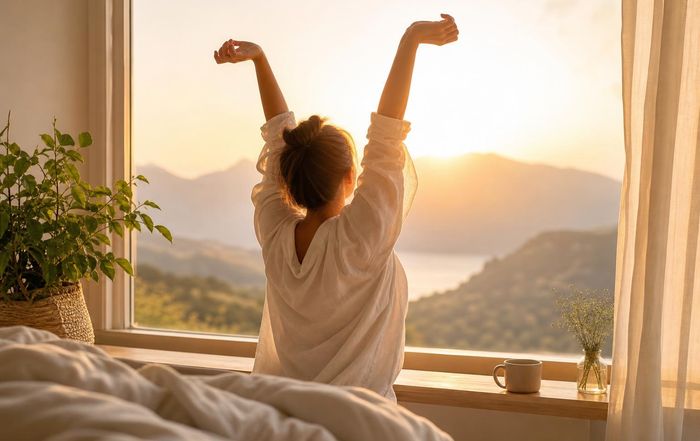
Why Morning Light Belongs in Your Wellness Routine
Many wellness habits demand willpower: intense workouts, strict diets, elaborate skincare. Morning light is different. It's free, widely accessible, and requires only a small shift in daily rhythm-yet it can influence sleep quality, mood, metabolism, and even long-term health in ways that researchers are only beginning to fully map out.
Understanding why morning light matters starts with how the body keeps time. Humans are not built to live in constant indoor light and late-night screen glow; we evolved under bright days and dark nights. Reintroducing even a modest dose of natural morning light can help realign this internal clock with the outside world, complementing many of the wellness, mindfulness, and fitness practices people already rely on.
How your body clock actually uses light
Deep in the brain, a tiny structure called the suprachiasmatic nucleus (SCN) acts as the master circadian clock. It receives light information from specialized cells in the eye that are especially sensitive to blue-enriched daylight. When bright light hits the eyes in the morning, that signal tells the SCN that "day has begun," which then synchronizes countless processes: hormone release, body temperature, digestion, alertness, and even immune function.
Research from organizations like the National Institutes of Health shows that this circadian system runs on an internal rhythm slightly longer than 24 hours for most people, so it needs a daily reset to stay aligned with the solar day. Morning light is the most powerful cue for that reset. Without enough bright light early in the day-and with too much artificial light at night-the clock drifts later, contributing to difficulty falling asleep, grogginess, and impaired concentration the next day. Guidance from the American Academy of Sleep Medicine and other sleep bodies emphasizes that consistent exposure to bright morning light is one of the simplest ways to stabilize circadian timing.
Artificial indoor lighting, while helpful for visibility, is usually far dimmer than outdoor daylight. On a cloudy morning, outdoor light can still be many times brighter than most indoor environments. That contrast matters: the circadian system responds to brightness in a roughly logarithmic way, so stepping outside-even briefly-provides a far stronger time cue than staying near a window. For people living in dense cities or higher latitudes, this makes deliberate morning light exposure especially important.
Sleep quality, melatonin, and the power of a morning reset
Melatonin, a hormone produced by the pineal gland, is often described as the body's "darkness signal." It rises in the evening to help initiate sleep and falls in the morning as light returns. According to guidance from the National Sleep Foundation, bright light in the early part of the day helps shut down melatonin production at the right time, sharpening morning alertness and supporting a clear distinction between day and night in the brain.
When morning light is lacking, melatonin may remain elevated later into the day and then shift to a delayed schedule at night. Over time, this can produce a pattern where someone feels wide awake late in the evening, struggles to fall asleep, and then wakes groggy. Studies summarized by organizations like Harvard Medical School suggest that regular morning light exposure can help advance the timing of melatonin in people with delayed sleep phase tendencies, effectively nudging sleep earlier without medication.
This matters not only for how long people sleep but also for sleep quality. Laboratory research indicates that when circadian rhythms are aligned with habitual sleep and wake times, people spend more time in restorative slow-wave and REM sleep. Conversely, circadian misalignment-even when total sleep time is held constant-has been associated with impaired glucose tolerance, higher blood pressure, and elevated markers of inflammation. For readers exploring broader health and wellness strategies, morning light can act as a quiet but powerful foundation under more visible habits like exercise or nutrition.
Mood, mental health, and seasonal shifts
The connection between light and mood has been recognized for decades. Seasonal affective disorder (SAD), a form of depression that recurs in darker months, is strongly linked to reduced daylight exposure. Organizations such as the Mayo Clinic and NHS describe light therapy as a first-line treatment for SAD, often delivered through high-intensity light boxes that mimic bright morning light. While not everyone experiences full SAD, many people notice milder "winter blues"-lower energy, reduced motivation, and more sleepiness-when days are short.
Morning light appears to influence mood through several pathways. It strengthens circadian alignment, which itself supports emotional regulation and cognitive function. It also affects neurotransmitters such as serotonin, which plays a key role in mood, appetite, and feelings of well-being. Observational studies have linked greater daylight exposure with higher serotonin levels, and some research suggests that people who spend more time outdoors during the day report fewer depressive symptoms.
For people already working on mental health through therapy, mindfulness, or medication, incorporating morning light can be a low-effort adjunct. Psychiatrists and clinical guidelines from bodies like the American Psychiatric Association often recommend establishing a regular sleep-wake schedule and maximizing morning light as part of non-pharmacological strategies for mood stabilization. This is especially relevant for those who work from home, spend most of the day indoors, or live in northern regions where sunrise occurs late in winter.
While morning light is not a substitute for professional care when depression or anxiety are significant, it can be part of a supportive daily rhythm, complementing practices like meditation, gentle movement, or journaling that readers may already explore through mindfulness and lifestyle content.
Metabolism, weight, and daytime energy
Circadian biology research increasingly points to a close relationship between light exposure, metabolism, and body weight. The National Institute of Diabetes and Digestive and Kidney Diseases and other research groups have highlighted how metabolic processes follow daily rhythms: insulin sensitivity, appetite hormones, and digestive efficiency all vary across the 24-hour cycle.
Morning light appears to signal the body to shift into a daytime metabolic mode. Studies have found that individuals who receive more of their daily light exposure earlier in the day tend to have lower body mass index (BMI) compared with those whose light exposure is delayed, even when sleep duration and caloric intake are similar. While correlation does not prove causation, the pattern supports the idea that timing of light-and by extension, timing of meals and activity-matters for metabolic health.
This aligns with emerging guidance from organizations like the World Health Organization and Centers for Disease Control and Prevention that emphasize regular sleep and activity patterns as part of chronic disease prevention. Eating the largest meals late at night, when circadian rhythms are primed for rest rather than digestion, has been associated with impaired blood sugar control and weight gain in some studies. Morning light can help anchor earlier wake times, which in turn makes it easier to shift breakfast and daytime meals earlier, supporting a more metabolically favorable schedule.
On a more immediate level, bright light early in the day can reduce the need for excessive caffeine by improving natural alertness. That can help avoid the late-afternoon "crash" that often follows heavy caffeine use, indirectly supporting more consistent energy across the day and smoother transitions into evening wind-down routines.
Skin, beauty, and the balance between benefit and risk
Any discussion of sunlight has to grapple with its double-edged nature. Ultraviolet (UV) radiation is a major risk factor for skin cancer and premature skin aging. At the same time, sunlight is the primary natural source of vitamin D for most people, and short, moderate exposures-especially during lower-intensity morning hours-can often provide benefits with less risk than midday sun.
Health agencies such as the World Health Organization and American Academy of Dermatology emphasize sun protection, but they also acknowledge that brief, controlled exposure can be reasonable for many people, particularly when UV index is low. Morning light generally has a lower UV intensity than midday light, which means that spending a short time outdoors in the early part of the day can deliver strong circadian cues with comparatively less UV damage, especially when combined with protective habits like clothing, hats, and sunscreen.
From a beauty and skin health perspective, the key is intentionality. A few minutes of morning light exposure need not involve sunbathing or tanning; sitting on a shaded balcony, walking under trees, or standing by an open window where indirect daylight reaches the eyes can be sufficient for circadian benefits while minimizing direct UV to the face and body. For individuals at high risk of skin cancer, following personalized guidance from dermatologists and national cancer organizations remains essential.
How much morning light is enough?
There is no single universal prescription, but several sleep and chronobiology experts converge on practical ranges. Guidance from institutions like Harvard Medical School and the National Sleep Foundation often suggests aiming for around 20-30 minutes of outdoor light exposure within the first one to two hours after waking on most days, with more time helpful for people who wake before sunrise or live at higher latitudes in winter.
Because daylight intensity can vary by season, weather, and geography, the goal is less about an exact minute count and more about regular exposure to light that is clearly brighter than indoor conditions. On a bright morning, even 10-15 minutes outside can be powerful; on overcast days, longer may be useful. Importantly, the light needs to reach the eyes; sunglasses that heavily block light or staying behind closed blinds will blunt the effect, though UV-blocking lenses that still allow substantial visible light through are often acceptable.
For those with specific sleep disorders, mood conditions, or eye diseases, more precise recommendations may be appropriate. In such cases, organizations like the American Academy of Sleep Medicine and local healthcare providers can help tailor timing and duration, and some people may benefit from medically supervised light therapy devices during darker months.
Building a morning light ritual that fits your life
Integrating morning light into a wellness routine works best when it is paired with existing habits rather than added as an abstract task. For many people, relocating something they already do-like drinking coffee, stretching, or checking messages-to a balcony, doorstep, or nearby park can be enough to make morning light exposure sustainable.
Readers who practice yoga, breathwork, or gentle mobility exercises can consider moving part of that routine outdoors, combining movement with light and fresh air. Those focusing on fitness might shift a portion of their training-such as a warm-up walk or easy run-to the early hours. For individuals exploring meditation or journaling, sitting near an open window with direct access to the sky can deliver both psychological and circadian benefits.
From a broader lifestyle perspective, designing a "light-first" morning can create a calming anchor for the day. This might mean waking at a consistent time, stepping outside before opening a laptop, and saving intense digital engagement for later in the morning. For remote workers, this can help recreate some of the natural light exposure that commuting used to provide. Pairing light with enjoyable sensory cues-music, a favorite tea, or mindful breathing-can reinforce the habit without turning it into another item on a self-improvement checklist.
Travel, jet lag, and using light to adjust your clock
For international travelers and people who frequently cross time zones, light is one of the most effective tools for managing jet lag. Organizations such as the Centers for Disease Control and Prevention and Sleep Foundation note that carefully timed exposure to bright light, particularly in the morning local time at the destination, can help shift the circadian clock toward the new schedule more quickly.
When flying east, where the local time is ahead, seeking morning light at the destination and avoiding bright evening light can help advance the body clock. When flying west, afternoon and early evening light may be more helpful. While detailed jet-lag schedules can be complex, a simple rule for many trips is to align morning light exposure with the wake time you want to adopt in the new location. For readers interested in travel, this can make the difference between losing several days to fatigue and adjusting within a shorter window.
Business travelers, athletes, and cabin crew often use structured light exposure strategies alongside sleep timing, hydration, and meal planning to maintain performance across time zones. Even for occasional holiday travel, stepping into the morning sun on arrival days is a low-effort way to support adaptation.
When morning light is harder to access
Not everyone can easily step outside early in the day. People working night shifts, living in dense urban housing without balconies, or caring for young children may find morning light exposure challenging. In these cases, it helps to think in terms of "better" rather than "perfect."
For shift workers, circadian alignment is more complex because work schedules may run directly counter to the natural light-dark cycle. Guidance from bodies like the World Health Organization and occupational health agencies suggests that strategic use of bright light during night shifts and careful light avoidance during daytime sleep can reduce some of the strain. When days off allow, however, getting natural morning light aligned with a more typical sleep schedule can still be restorative.
For those with limited outdoor access, opening blinds fully, sitting near the brightest window, or briefly stepping into a courtyard or onto a doorstep can increase light exposure relative to staying in interior rooms. Some people also use certified light therapy boxes during darker months, particularly in higher-latitude regions, under the guidance of a healthcare professional. While these devices cannot fully replicate the spectrum and psychological benefits of being outdoors, they can provide a strong circadian signal when used correctly.
Individuals with eye conditions, a history of bipolar disorder, or sensitivity to light should consult clinicians before undertaking intense light therapy, as professional guidelines from organizations like the American Psychiatric Association highlight specific precautions for these groups.
Fitting morning light into a broader wellness picture
Morning light is not a cure-all, but it is one of the rare interventions that touches multiple dimensions of well-being at once: sleep, mood, metabolism, cognitive function, and daily energy. It interacts naturally with other wellness behaviors-exercise, nutrition, stress management, and mindfulness-and can make many of them easier to maintain by stabilizing the daily rhythm that underlies them.
Readers exploring holistic wellness may find it helpful to think of morning light as a keystone habit: a small change that quietly reshapes the day. Waking at a consistent time, stepping into real daylight, delaying bright screens until after this exposure, and aligning meals and movement with the active portion of the day can, over weeks and months, support both physical and mental health. For those interested in broader health news, ongoing research in circadian biology, metabolism, and mental health continues to refine how clinicians and policymakers view the role of light in public health.
In a culture that often equates wellness with complexity, morning light offers something refreshingly simple. Opening a door, stepping outside, and letting the day reach your eyes may be one of the most accessible, sustainable practices available. The challenge is less about knowledge and more about priority: choosing, as often as life allows, to start the day by meeting the light that sets your internal clock in motion. Thanks for reading through the full article. A thoughtful perspective can linger long after the details themselves begin to fade.