

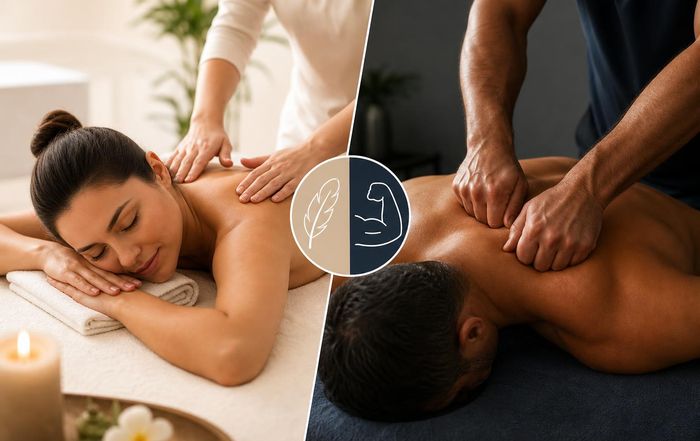
Swedish vs Deep Tissue Massage: How to Choose the Right Style for Your Body
For anyone booking a massage to ease tension, recover from training, or simply unwind, the choice between Swedish and deep tissue is often the first-and most confusing-decision. Both are widely available in spas, wellness centers, and sports clinics around the world, and both involve hands-on work on the muscles and soft tissues. Yet they feel very different, serve different goals, and are not equally suitable for every body or situation.
This guide unpacks how Swedish and deep tissue massage compare in terms of techniques, pressure, benefits, risks, and ideal use cases. It also looks at what science actually says about massage in general, and how to talk to a therapist so your session matches what you really need. For wellness focused individuals who want to explore massage more broadly, the dedicated massage and wellness sections offer additional context on bodywork, relaxation, and holistic care.
What Swedish Massage Actually Is
Swedish massage is the classic "relaxation massage" many people picture when they imagine a spa treatment. It originated in Europe in the 19th century and has since become a global standard. Sessions typically use oil or lotion and involve long, flowing strokes that cover large areas of the body, often with soothing music and a calming environment.
Technically, Swedish massage is built around several core stroke types, including long gliding strokes, kneading, rhythmic tapping, friction, and gentle shaking or vibration. Therapists usually work with the muscle layers closer to the surface, following the direction of blood flow back toward the heart to support circulation. Pressure can be light to firm, but the intent is generally to be comfortable and relaxing rather than intense or painful.
In many countries, Swedish massage is the default option in day spas and hotel spas, while clinical or sports settings may pair it with other techniques. Professional standards and training vary by region, but reputable therapists typically complete formal programs and follow health and hygiene guidelines established by local authorities or professional associations. Organizations such as the American Massage Therapy Association (https://www.amtamassage.org/) and the Federation of Holistic Therapists in the UK (https://www.fht.org.uk/) provide frameworks for education and ethics in this field.
What Deep Tissue Massage Actually Is
Deep tissue massage is often described as "Swedish, but deeper," yet the differences go beyond just using more pressure. Deep tissue work focuses on specific muscles, fascia, and areas of chronic tension, with an emphasis on the deeper layers of soft tissue. Sessions may still use oil or lotion, but strokes are typically slower, more targeted, and more deliberate.
Therapists may use fingers, thumbs, knuckles, forearms, and elbows to sink gradually into the tissue, working through tight bands or "knots" and following the direction of muscle fibers. Deep tissue massage is frequently used in sports and rehabilitation contexts, and many practitioners also incorporate techniques from myofascial release, trigger point therapy, or neuromuscular therapy, depending on their training.
Because of its intensity, deep tissue massage is more likely to be associated with discomfort during the session and temporary soreness afterward. Reputable therapists aim for a "hurts but tolerable" sensation rather than sharp or overwhelming pain. Professional bodies such as the National Certification Board for Therapeutic Massage & Bodywork in the US (https://www.ncbtmb.org/) and various national massage councils provide guidance on scope of practice and safe application of deeper techniques.
Technique and Pressure: How the Two Styles Feel Different
From a client's perspective, the most obvious difference between Swedish and deep tissue massage is how they feel on the table. Swedish massage usually involves continuous, flowing strokes over broad areas like the back, legs, or arms, with pressure that can be light to moderately firm but is generally soothing. The therapist may move rhythmically, shifting between areas in a way that encourages the nervous system to downshift into a more relaxed state. Many people describe it as feeling "cocooned" or "smoothed out," with a focus on overall comfort.
Deep tissue massage, by contrast, tends to feel more methodical and localized. Instead of long sweeping strokes, the therapist may spend extended time on specific muscles or small areas, slowly working through layers of tension. Pressure is often applied gradually, with pauses to allow the tissue to adapt. The sensations can range from strong, stretching pressure to a deep ache, and clients are usually encouraged to give ongoing feedback. If the therapist is targeting trigger points-hyperirritable spots in muscle or fascia-the sensation may radiate or feel "referred" to another area.
It is a misconception that deep tissue must always be extremely painful to be effective. Research reviewed by bodies such as the National Institutes of Health (https://www.nih.gov/) suggests that excessive pain can actually trigger guarding and increase muscle tension. The key difference is not pain but depth and intent: Swedish aims at general relaxation and circulation in superficial layers, while deep tissue prioritizes releasing specific restrictions in deeper structures.
Primary Goals: Relaxation vs Targeted Problem-Solving
Swedish massage is usually chosen for overall relaxation, stress relief, and gentle support for wellbeing. It is well suited to people who feel generally tense, mentally overloaded, or physically tired without having a specific injury or chronic pain focus. The treatment can support parasympathetic nervous system activation-the "rest and digest" state-by combining calming touch, slower breathing, and a quiet environment. For many, this makes Swedish massage a complement to other mindfulness and stress-management practices such as meditation or yoga.
Deep tissue massage is more often selected with a specific issue in mind: chronic neck or shoulder tightness from desk work, recurring lower back discomfort, hip and leg tension from running, or lingering stiffness after an old injury. While it can be relaxing in its own way, the primary goal is typically therapeutic: to improve mobility, reduce pain, or address patterns of muscular imbalance. In sports and fitness contexts, deep tissue work may be used alongside fitness training, stretching programs, or physiotherapy to support performance and recovery.
That said, the boundary between the two is not rigid. Many therapists blend Swedish and deeper techniques within one session, adjusting pressure and focus based on the client's needs and responses. In some wellness and lifestyle settings, a "firm Swedish" massage may overlap significantly with what another practitioner would call "gentle deep tissue," underscoring the importance of communication rather than relying solely on labels.
What the Research Says About Benefits
Scientific research on massage is diverse and sometimes mixed, but several patterns have emerged across studies and reviews. Major health organizations, including the World Health Organization (https://www.who.int/) and national health services such as NHS England (https://www.nhs.uk/), generally view massage as a complementary approach rather than a replacement for medical care.
For Swedish-style relaxation massage, studies have reported short-term reductions in anxiety, perceived stress, and muscle tension, along with modest improvements in mood and sleep quality. Some research reviewed by the Mayo Clinic (https://www.mayoclinic.org/) and Cleveland Clinic (https://my.clevelandclinic.org/) suggests that massage can lower levels of stress hormones like cortisol and increase levels of neurotransmitters linked to wellbeing, although effects vary and tend to be temporary. For many people, this is precisely the value: a periodic reset that supports broader lifestyle changes, such as better sleep routines or regular exercise.
Deep tissue massage is often studied in the context of chronic musculoskeletal pain, including lower back pain, neck pain, and conditions like osteoarthritis. Systematic reviews cited by organizations such as PubMed via the U.S. National Library of Medicine (https://pubmed.ncbi.nlm.nih.gov/) have found that massage can provide short-term pain relief and functional improvement for some individuals, often comparable to other non-pharmacological interventions. However, evidence is not uniform: benefits can depend on the specific condition, treatment frequency, practitioner skill, and how massage is combined with other therapies like exercise or education.
Importantly, research rarely isolates "pure" Swedish vs "pure" deep tissue in large trials, so claims that one style is definitively superior for particular conditions should be treated cautiously. Many successful treatment approaches are individualized blends. The most reliable takeaway is that massage, used appropriately, can be a helpful adjunct to a broader health or wellness plan, particularly for stress-related tension and some types of musculoskeletal discomfort.
When Swedish Massage Is Usually the Better Choice
Swedish massage tends to be the more suitable option in several common situations. For people who are new to professional massage, starting with Swedish can be a gentle way to learn how their body responds to touch, pressure, and the overall experience. The slower, more general nature of the work makes it easier to relax and to notice preferences without the intensity that sometimes accompanies deeper techniques.
It is also often recommended for individuals whose primary concern is stress, burnout, or mental fatigue rather than localized pain. Office workers with general upper body tightness, parents with sleep deprivation, or travelers dealing with jet lag may all benefit from a treatment focused on soothing the nervous system and improving circulation. In these cases, the psychological and emotional effects of feeling cared for and deeply relaxed can be just as important as any mechanical effects on the muscles.
Swedish massage is commonly preferred for certain health situations where strong pressure might not be advisable. People with conditions such as osteoporosis, some cardiovascular issues, or those recovering from recent surgery may be better suited to lighter, more superficial work, although they should always consult their healthcare provider first. Guidelines from organizations like the American College of Sports Medicine (https://www.acsm.org/) and national health services emphasize adapting intensity to the individual, and skilled therapists can tailor Swedish techniques to be very gentle when needed.
Finally, Swedish massage is often a good fit for those who simply enjoy a spa-like environment and see massage as part of a broader self-care routine that might include beauty treatments, mindfulness practices, or relaxation-focused travel. In these contexts, the primary outcome is usually feeling restored and rebalanced, rather than working on a specific musculoskeletal complaint.
When Deep Tissue Massage May Be More Appropriate
Deep tissue massage is typically more appropriate when there is a clear, localized pattern of chronic tension, restricted movement, or recurrent pain that appears to be muscular or fascial in origin. Common examples include persistent tightness between the shoulder blades from desk work, hip and hamstring stiffness in runners, or a recurring band of tension at the base of the skull. In these scenarios, deeper, more focused work can help address adhesions and long-standing holding patterns that light pressure alone may not reach.
Athletes and physically active individuals often use deep tissue massage as part of a recovery or performance strategy. While evidence is still evolving, sports organizations and teams around the world frequently integrate massage with strength training, stretching, and other modalities. Resources from bodies such as World Athletics (https://worldathletics.org/) and elite sports institutes highlight massage as one of several tools that may help manage muscle soreness, support flexibility, and reduce perceived fatigue, especially when sessions are timed appropriately around training cycles.
Deep tissue massage can also be beneficial when postural imbalances contribute to discomfort. For instance, people who spend long hours on screens may develop forward-head posture and rounded shoulders, leading to tightness in the chest and neck and weakness in upper back muscles. A skilled therapist can use deeper techniques to release shortened muscles and fascia while suggesting stretches or movements to help maintain changes. In these more targeted situations, deep tissue work is sometimes coordinated with physiotherapists, chiropractors, or other healthcare providers.
However, deeper is not automatically better. For individuals with certain medical conditions-such as blood clotting disorders, severe osteoporosis, recent fractures, or some forms of cardiovascular disease-strong pressure may be contraindicated. Professional guidelines from organizations like the American Massage Therapy Association and national regulatory bodies stress the importance of thorough health histories and, when in doubt, medical clearance. Anyone with complex health issues should discuss deep tissue massage with their doctor before booking.
Pain, Soreness, and Safety Considerations
A frequent question is whether deep tissue massage "should" hurt, and how that compares to Swedish massage. With Swedish, the general expectation is comfort. Pressure can be adjusted to be very light or moderately firm, but if a client experiences sharp pain or breath-holding tension, the therapist will typically back off. People may still feel pleasantly "worked" afterward, but significant soreness is less common when the session is performed gently and within the body's tolerance.
Deep tissue massage often involves sensations that border on discomfort, especially when addressing chronic knots or trigger points. A mild to moderate "good pain" that eases as the therapist works can be normal, but intense, sharp, or burning pain is not considered necessary or desirable. Overly aggressive techniques can lead to excessive soreness, bruising, or in rare cases more serious tissue irritation. Communication is essential: clients should feel able to say "that's too much" at any time, and therapists should respond promptly.
Post-massage soreness, particularly after deep tissue work, may last from several hours to a couple of days, similar to delayed-onset muscle soreness after unfamiliar exercise. This can be mitigated by adequate hydration, gentle movement, and, if appropriate, light stretching. If pain is severe, persists beyond a few days, or is accompanied by symptoms such as numbness, swelling, or unusual weakness, medical advice should be sought. Reputable sources such as Johns Hopkins Medicine (https://www.hopkinsmedicine.org/) and Harvard Health Publishing (https://www.health.harvard.edu/) emphasize listening to the body's signals and treating massage as supportive rather than heroic.
In all cases, safety is enhanced when therapists conduct a thorough intake, ask about medications and health history, and explain what they plan to do. Clients can further protect themselves by choosing practitioners who are qualified, insured, and, where relevant, licensed according to local regulations. Checking professional association membership and reading independent reviews can be part of a sensible health and world wellness decision-making process.
How to Decide: Questions to Ask Yourself (and Your Therapist)
Choosing between Swedish and deep tissue massage becomes easier when the decision is framed around your goals, health status, and personal preferences rather than the label alone. Before booking, it can help to consider a few questions. What is the main reason for seeking a massage right now: general relaxation, stress relief, or a specific pain or mobility issue? If the primary aim is to unwind and reset, Swedish or a gentle, blended style is often sufficient. If there is a long-standing knot in one shoulder or recurring hip tightness affecting movement, deeper, targeted work might be more useful.
Your overall health and any medical conditions also matter. Are you pregnant, living with a chronic illness, or recovering from surgery or injury? In these cases, modified Swedish or specialized modalities (such as prenatal massage) may be safer, and healthcare guidance is important. National organizations like The Royal College of Obstetricians and Gynaecologists (https://www.rcog.org.uk/) and reputable maternity resources generally support appropriately adapted massage in healthy pregnancies, but deep, intense pressure on certain areas may be avoided.
Personal comfort with pressure, touch, and vulnerability is another factor. Some people find strong pressure cathartic and satisfying, while others become tense or anxious when sensations are too intense. Cultural background, previous experiences, and individual pain thresholds all influence this. Discussing boundaries, preferred areas of focus, and any concerns at the start of the session can help tailor the treatment, whether it is labeled Swedish, deep tissue, or a combination.
It is also worth asking the therapist how they typically work and how they adapt sessions. Experienced practitioners often draw from multiple techniques and can adjust pressure moment by moment. In many modern wellness and business settings, the menu names are starting points rather than strict rules; what matters most is the conversation and the responsiveness during the session.
Integrating Massage into a Broader Wellness Routine
Whether you gravitate toward Swedish or deep tissue, massage tends to be most beneficial when integrated into a broader lifestyle approach rather than used in isolation. For stress-related tension, pairing periodic Swedish massage with daily relaxation techniques, movement breaks during work, and consistent sleep habits can create more lasting change than massage alone. Happy individuals interested in building such routines may find ideas in the site's wellness and mindfulness coverage.
For those using deep tissue massage to manage musculoskeletal issues, collaboration with other professionals can be valuable. Physiotherapists, sports physicians, and strength coaches may suggest specific exercises, stretching protocols, or ergonomic adjustments that address underlying causes. Organizations such as the Chartered Society of Physiotherapy in the UK (https://www.csp.org.uk/) and the American Physical Therapy Association (https://www.apta.org/) provide guidance on evidence-based approaches to pain and movement problems, with massage sometimes playing a complementary role.
Frequency is another consideration. Some people benefit from occasional sessions during particularly stressful periods, while others schedule regular monthly or fortnightly appointments as part of their self-care budget. There is no universal rule; the right cadence depends on goals, response, and practical factors such as time and cost. Paying attention to how you feel in the days and weeks after a session-physically, mentally, and in terms of function-can help refine what works best for you.
Ultimately, the choice between Swedish and deep tissue massage is less about picking the "better" technique and more about aligning the style of touch with what your body and mind need at a given moment. Clear communication, realistic expectations, and a willingness to adjust over time will usually matter far more than the name on the treatment menu.