

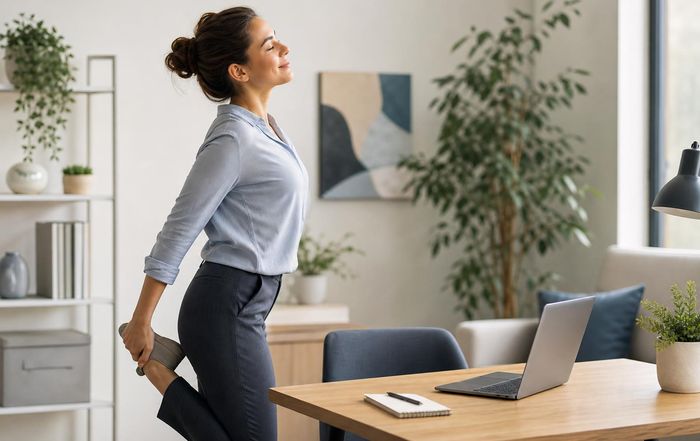
Movement Snacks That Fit Between Meetings: How to Move More in a Busy Workday
Back-to-back meetings, long video calls, and endless email threads can make a workday feel almost motionless. Yet health authorities increasingly stress that sitting for long stretches is a risk factor for heart disease, type 2 diabetes, some cancers, and even premature death, independent of whether a person also exercises before or after work. Research cited by organizations such as the World Health Organization and U.S. Centers for Disease Control and Prevention suggests that regularly breaking up sedentary time with even light activity can improve blood sugar control, circulation, mood, and energy levels. That is where "movement snacks" come in: brief, intentional bursts of movement that fit into the tiny gaps of a busy schedule without requiring a full workout, a change of clothes, or equipment.
For people working in offices, at home, in co-working spaces, or on the road, movement snacks offer a practical way to align everyday life with wellness goals. They complement more structured exercise, but they also stand on their own as a strategy to reduce the harms of prolonged sitting. This article explores the science behind movement snacks, offers concrete ideas that fit between meetings, and shows how to build a movement-friendly workday that supports overall wellness, productivity, and mental health.
Why Micro-Movement Matters More Than You Think
The phrase "sitting is the new smoking" oversimplifies the science, but it reflects a real concern: large observational studies have linked high amounts of sedentary time with increased risk of cardiovascular disease and early mortality, especially in people who do little moderate-to-vigorous physical activity overall. Guidance from the World Health Organization (who.int) and agencies such as Public Health England and the Australian Department of Health emphasizes not only total weekly exercise, but also minimizing long uninterrupted periods of sitting. Importantly, laboratory studies show that standing up and moving briefly every 20-30 minutes can improve markers like blood glucose and insulin response after meals, which may be particularly relevant for people with or at risk of type 2 diabetes.
Organizations including the American Heart Association (heart.org) and CDC (cdc.gov) highlight that all movement counts: walking to the printer, climbing stairs, or doing a quick set of squats can contribute to daily activity targets. Small bouts accumulate, and even light-intensity movement can reduce stiffness, improve joint lubrication, and support musculoskeletal health, which is particularly important for people who spend much of their day at a computer. From a mental health perspective, breaking up work with movement has been associated with improved mood, reduced perceived stress, and better focus, echoing findings from researchers and organizations like Mind in the UK (mind.org.uk). For those navigating demanding jobs, family responsibilities, or hybrid work arrangements, movement snacks provide a realistic, low-barrier entry point into healthier routines that align with broader goals in health, fitness, and lifestyle.
What Exactly Are "Movement Snacks"?
Movement snacks are short bursts of intentional physical activity-often 30 seconds to 5 minutes-that can be slotted into natural breaks during the day. Unlike a traditional workout, they do not require a warm-up, special clothing, or a dedicated block of time, and they are usually integrated around work tasks, meetings, or daily routines. The concept is similar to "exercise snacks" described in exercise science literature and by organizations such as Exercise is Medicine (exerciseismedicine.org), but with an even broader focus: any movement that interrupts sedentary time and gets muscles working counts.
These mini-sessions might involve light stretching between video calls, a brisk walk while listening to a recorded briefing, or a quick stair climb before returning to your desk. They can be tailored to different environments-corporate offices, home offices, co-working spaces, or even airports for frequent travelers. For people who already follow structured training plans, movement snacks help maintain circulation and joint comfort on otherwise sedentary days. For those who find it hard to commit to longer workouts, they can be a primary strategy to build more active habits and support everyday mindfulness by reconnecting with the body multiple times throughout the day.
Science Snapshot: How Short Bouts Stack Up
While movement snacks are not a substitute for all the benefits of a longer workout, research suggests they can meaningfully contribute to health. Guidelines from the U.S. Department of Health and Human Services (health.gov) and similar agencies in Europe and Asia now emphasize that physical activity can be accumulated in bouts of any duration, abandoning older recommendations that insisted on at least 10-minute blocks. Studies in journals such as Diabetologia and Medicine & Science in Sports & Exercise have found that interrupting sitting every 20-30 minutes with a few minutes of light walking can improve post-meal glucose and insulin responses compared with sitting continuously, especially in people with overweight or metabolic risk factors.
Other research indicates that short, higher-intensity "exercise snacks" (for example, brief stair sprints several times a day) can improve cardiorespiratory fitness over weeks, though these protocols may not be appropriate for everyone, especially those with heart or joint conditions. Occupational health bodies, including Safe Work Australia (safeworkaustralia.gov.au), also note that regular micro-breaks with light movement can reduce musculoskeletal discomfort and eye strain in office workers. For mental health, even two to three minutes of movement can shift physiological arousal, help discharge stress, and reset attention, supporting the kind of sustained focus needed in modern knowledge work. In practice, this means that a day sprinkled with movement snacks may leave someone feeling more energized and less drained compared with an identical schedule performed entirely in a chair.
Designing Movement Snacks That Fit Between Meetings
Fitting movement into a busy day works best when it is anchored to existing routines. Rather than relying on willpower alone, it helps to attach specific movements to predictable triggers: the start or end of a meeting, a calendar reminder, or even a regular coffee break. A simple approach is to adopt a "move at every transition" rule: any time a meeting ends, a call drops, or an email is sent, that is a cue to stand up and move for at least 60-120 seconds. Over the course of a workday with multiple meetings, this can add up to 20-30 minutes of additional light activity without blocking out a separate exercise slot.
To make movement snacks sustainable, they should be realistic for the environment. In open-plan offices, discreet options such as desk stretches, standing calf raises, or a loop around the floor may feel more comfortable than jumping jacks. At home, people might feel freer to do a set of lunges, yoga poses, or a short dance break between video calls. Those working in roles with short but frequent lulls-such as customer service or project-based work-can use these natural gaps for movement instead of automatically reaching for their phone. For readers who travel regularly, integrating movement into layovers, hotel rooms, or conference corridors can help counteract long flights and conference sitting, aligning with a more active approach to travel and work.
Quiet Desk-Friendly Movement Snacks (1-3 Minutes)
For many professionals, the challenge is finding movements that feel appropriate in a shared workspace and that do not require changing clothes or leaving the floor. Quiet, desk-friendly movement snacks focus on gentle mobility, posture resets, and light activation of major muscle groups. One simple pattern is to stand up at the end of each virtual meeting and perform a short sequence: shoulder rolls, neck stretches, chest opening, and a few squats or calf raises. This can be done beside the chair, often out of the camera's view if the call runs slightly over.
Another option is a "posture reset" snack: standing tall, gently tucking the chin, drawing the shoulders back and down, and engaging the core for 30-60 seconds while breathing slowly. This helps counter the forward head and rounded shoulders that many people adopt over laptops and mobile screens. Gentle spinal mobility exercises-such as seated or standing cat-cow motions, where the spine alternately rounds and arches-can be done in a subtle way at a desk. For wrists and hands, which often take the brunt of keyboard and mouse work, simple circles, finger spreads, and gentle forearm stretches can relieve tension and may reduce discomfort related to repetitive tasks, complementing guidance from organizations like NIOSH at the CDC.
Leg muscles can also be engaged without attracting attention: standing calf raises while reading a document, mini squats holding onto the back of a chair, or shifting weight from one leg to the other and lightly engaging the glutes. These small actions encourage blood flow and help prevent stiffness, especially for those dealing with low back or hip tightness. Integrating these desk-friendly options supports not only physical comfort but also sustained concentration, and they pair naturally with a broader interest in environment and workplace design that supports human health.
Corridor, Stairwell, and Office-Loop Snacks (3-5 Minutes)
When time allows for slightly more movement between meetings, short walks and stair climbs can be powerful. A simple "office loop"-walking briskly around the floor, to the restroom on a different level, or to a more distant water cooler-can easily fill a three- to five-minute gap. Walking at a moderate pace raises heart rate gently, supports circulation, and gives the eyes a break from screens, which aligns with ergonomic advice from bodies such as the American Optometric Association (aoa.org). In buildings with stairs, climbing one or two flights at a comfortable pace provides a short cardiovascular boost and engages leg muscles more intensely than flat walking.
For those who need to stay reachable, a short walk can often be combined with a phone call, provided confidentiality and noise levels are managed appropriately. Many people find that walking while talking encourages more creative thinking and reduces the sense of being "stuck" in a meeting. In hybrid or remote setups, a three-minute walk outside between virtual meetings can also provide natural light exposure, which may help regulate circadian rhythms and support sleep quality, as highlighted by sleep research organizations such as the National Sleep Foundation (thensf.org). Even in bad weather, pacing a hallway or climbing stairs indoors can substitute for an outdoor stroll.
While these activities sound simple, regular repetition throughout the day can accumulate into meaningful total movement. A person who walks briskly for five minutes six times a day adds up to 30 minutes of walking-close to the minimum daily target recommended by many public health authorities. For those tracking steps or activity through wearables, turning between-meeting gaps into short walks can be an effective way to reach daily goals without a single long workout session.
Energizing Movement Snacks for Home and Hybrid Workers
People working from home often have more flexibility to move but may also find themselves sitting longer because there are fewer natural interruptions-no commute, no walk to a meeting room, no casual stroll to a colleague's desk. Movement snacks can therefore be intentionally more dynamic in home environments, especially if time between calls allows. A two- to four-minute circuit might include bodyweight squats, wall push-ups, hip circles, and a few yoga-inspired stretches such as downward dog or a standing forward fold. These movements engage major muscle groups and can elevate heart rate slightly, providing a mild energy boost without leaving someone drenched in sweat.
Another approach is to pick a "default" move for the day-such as 10 lunges, 15 glute bridges, or 20 jumping jacks-and perform it after every meeting or deep-work block. Over the course of a day with six to eight meetings, this can total 60-160 repetitions, which contributes meaningfully to muscular endurance and overall activity levels. People who enjoy music might cue a favorite short song and move for its duration, turning a break into a mini dance or mobility session, which can also support mood and stress relief. Organizations like Headspace and Calm (headspace.com, calm.com) increasingly integrate movement into mindfulness practices, reflecting growing recognition that physical and mental resets are deeply intertwined.
Hybrid workers who split time between home and office can tailor their movement snacks accordingly: discreet stretches and walks on office days, more vigorous circuits or yoga flows on home days. Integrating these patterns into a weekly routine supports overall wellness and can complement more structured workouts, whether that is strength training, running, or group classes. It also reinforces the idea that health is woven through the entire day, not confined to a single hour at the gym.
Mindful Movement Snacks for Stress and Focus
Movement snacks do not have to be fast or intense to be effective. For many people, especially during high-pressure periods, the most valuable micro-breaks combine gentle movement with mindful attention. A simple standing breath-and-stretch sequence can serve as a reset between emotionally demanding meetings or challenging tasks. For instance, standing with feet hip-width apart, inhaling while sweeping the arms overhead, and exhaling while lowering them slowly can be repeated for one to two minutes, focusing on the sensation of the breath and the movement. This kind of practice aligns with recommendations from mindfulness organizations and mental health charities such as Mind and Mental Health America (mhanational.org).
Chair yoga offers another quiet option: seated twists, gentle side bends, ankle circles, and shoulder rolls performed with deliberate breathing can release tension and improve body awareness. These movements can be particularly helpful for those who find it difficult to transition mentally between meetings; the brief ritual of moving and breathing marks a clear boundary between conversations and helps prevent emotional spillover. For people who use meditation apps, many now include short movement-based practices designed for work breaks, which can be done discretely in a small office or home workspace.
Incorporating mindfulness into movement snacks also helps counter the tendency to multitask constantly. Instead of scrolling through messages during a break, taking two minutes to move and breathe intentionally can restore a sense of clarity and control. This is especially relevant for readers interested in integrating mindfulness and wellness into their daily routines, not just in dedicated practice sessions.
Making Movement Snacks a Habit in a Busy Work Culture
Even the best movement plan fails without some structure. Building a habit of movement snacks often requires small environmental and behavioral nudges. One practical step is to adjust calendar settings so that 30-minute meetings default to 25 minutes and 60-minute meetings to 50 minutes, creating intentional movement windows. Many workplace platforms allow this, and some organizations now recommend it as part of employee wellbeing programs. Another strategy is to set a gentle reminder on a watch or computer to stand and move every 30-45 minutes, similar to prompts encouraged by occupational health services and wellness programs in large companies.
Physical cues also help. Keeping a resistance band, small massage ball, or yoga mat visible in a home office can serve as a reminder to move, while placing a water bottle or printer at a distance encourages additional walking. In corporate settings, advocating for small changes-such as centrally located bins or shared printers rather than one at every desk-can create more natural movement without formal policies. Employers interested in broader business and jobs wellbeing strategies may find that promoting micro-movement aligns with reduced musculoskeletal complaints and improved engagement, themes increasingly discussed in occupational health research and at organizations like the World Economic Forum (weforum.org).
Social accountability can reinforce the habit. Teams might agree to a "move minute" at the start or end of recurring meetings, cameras on or off depending on comfort. Some companies run step or movement challenges, though it is important these remain inclusive and do not pressure those with disabilities or health conditions. For individuals, tracking movement snacks in a simple log or app can provide a sense of progress without turning wellbeing into yet another performance metric. The aim is not perfection but a gradual shift from long, uninterrupted sitting to a day punctuated by frequent, varied movement.
Safety, Inclusivity, and Listening to Your Body
While movement snacks are generally low risk for most people, it is important to recognize individual differences. Those with cardiovascular disease, severe joint problems, balance issues, or other health conditions should follow the advice of their healthcare provider and may need to adapt movements accordingly. Organizations such as the American College of Sports Medicine (acsm.org) and national health services emphasize that people should start with gentle activity and progress gradually, paying attention to pain, dizziness, or unusual shortness of breath. In many cases, chair-based movements, simple posture changes, or very light walking will be more appropriate than vigorous exercises.
Inclusivity also means acknowledging that not all workplaces are physically or culturally supportive of movement. In some environments, leaving a desk frequently may be impractical or frowned upon, and uniforms or tight spaces can limit movement options. Even there, micro-adjustments-such as regularly shifting sitting posture, performing subtle ankle or shoulder movements, or standing briefly during a phone call-can still provide benefits. Employers and leaders who care about wellness and environment in the workplace can help by normalizing short movement breaks, providing clear guidance that they are acceptable, and ensuring that expectations around responsiveness do not discourage healthy behavior.
Listening to the body remains key. Movement snacks should leave a person feeling better, not worse. Mild muscle fatigue or a sense of warmth is normal; sharp pain, joint locking, or significant discomfort is a sign to stop and modify. Over time, many people notice that regular micro-movement reduces stiffness, improves posture, and makes longer exercise sessions more enjoyable, creating a virtuous cycle in which work, health, and everyday life feel more integrated.
Bringing It All Together
Between-meeting movement snacks are a practical response to the realities of modern work. They recognize that while not everyone can carve out an hour for the gym every day, nearly everyone has a few minutes scattered between calls, emails, and tasks. By turning those moments into opportunities for movement-whether through quiet desk stretches, brisk office loops, stair climbs, or mindful breath-and-stretch sequences-people can reduce the harms of prolonged sitting, support mental clarity, and align daily routines with long-term health.
For site visitors seeking a more balanced life, movement snacks offer a bridge between intention and action. They do not replace structured training, but they make wellbeing part of the workday rather than something postponed to evenings or weekends. Combined with thoughtful choices in lifestyle, health, and fitness, these small, regular bursts of activity can help transform a static schedule into one that supports energy, resilience, and sustainable performance-one meeting at a time.